
Opening a co-working space is often seen as the finish line. You find a location, set up desks, get fast internet, open the doors, and wait for members to arrive. But as this episode makes clear, that is only the beginning.
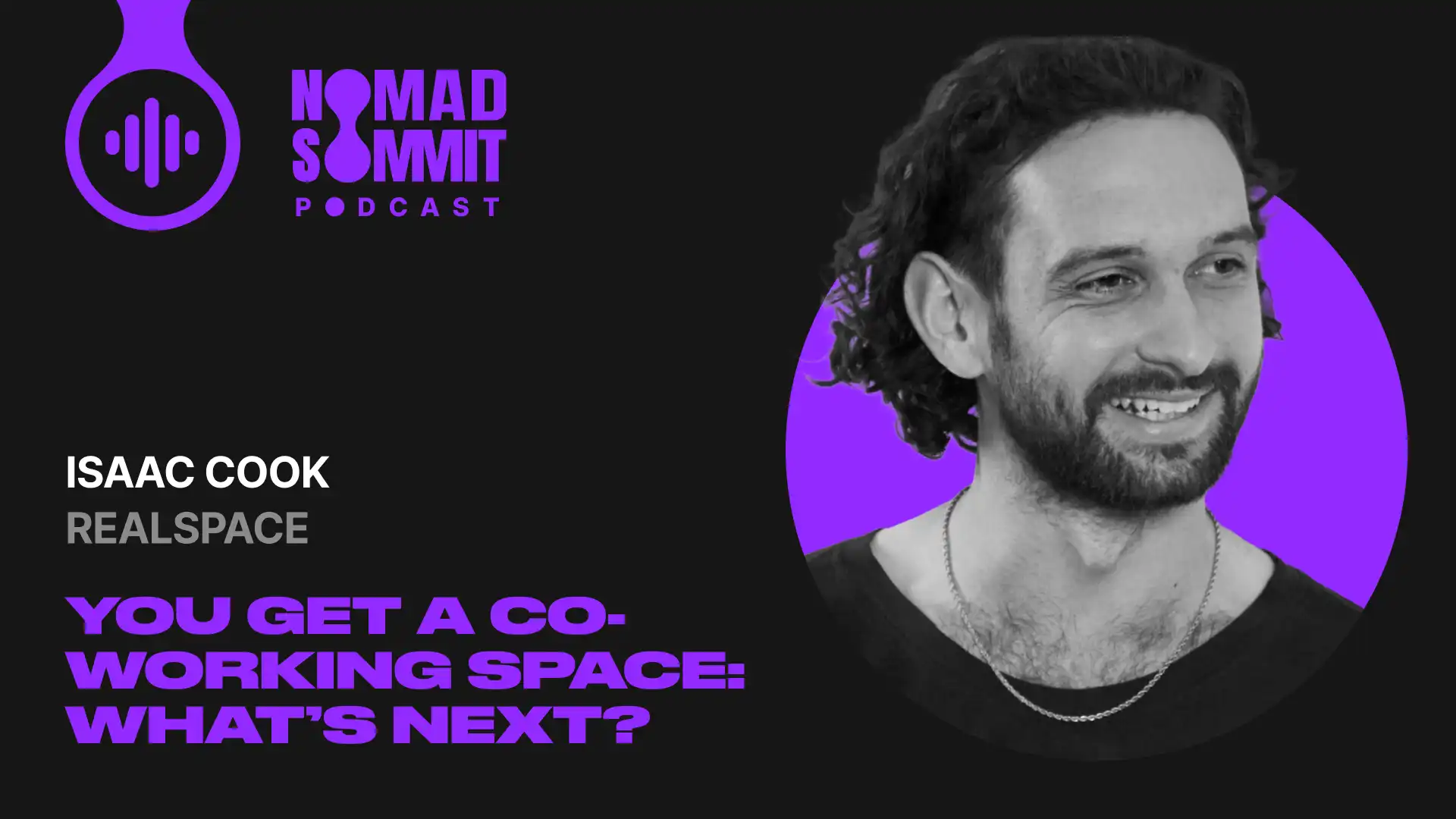
In episode 31 of the Nomad Summit Podcast, recorded in Chiang Mai, Palle Bo and Christoph Huebner sit down with Isaac Cook, founder of RealSpace, to talk about what really happens after you open a co-working space and why long-term success depends on much more than square meters and Wi-Fi.
From desks and Wi-Fi to community and culture
RealSpace has been part of Chiang Mai’s nomad scene, but Isaac explains that it was never meant to be just another place to sit with a laptop. From the start, the intention was to create a space where people would actually connect, collaborate, and feel part of something bigger.
What stands out in the conversation is that Isaac did not even come from a heavy co-working background. He was not a power user hopping between spaces around the world. Instead, the motivation came from wanting to build community and create an environment where people felt comfortable showing up every day.
That outside perspective turned out to be an advantage. Rather than copying an existing model, RealSpace evolved by listening closely to the people who used it and adapting as their needs changed.
Finding your niche in a crowded co-working city
Chiang Mai is one of the most competitive co-working markets in the world. There are countless spaces, each promising productivity, community, and great coffee. In that environment, standing out is not optional.
Isaac talks openly about how RealSpace had to find its own identity. Not by chasing trends, but by paying attention to what members were actually asking for. Over time, it became clear that many people using the space were creating content, even if they did not necessarily call themselves creators.
This insight became a turning point. Instead of positioning RealSpace as a general co-working space for everyone, the focus gradually shifted toward supporting creators, podcasters, and people building things online.
The rise of RealSpace Creative
One of the most concrete results of this shift is RealSpace Creative, a dedicated creator studio built inside the co-working space. The studio includes podcasting setups, video recording options, green screen facilities, and practical support for people who want to produce content but may not know where to start.
In the episode, Isaac explains that many members needed content for their business, brand, or projects, but felt overwhelmed by the technical side. They did not see themselves as creators, yet they clearly needed creative tools and guidance.
By lowering the barrier to entry and offering a supportive environment, RealSpace Creative became a natural extension of the co-working experience rather than a separate product.
Designing spaces for focus and connection
Another recurring theme in the conversation is balance. A good co-working space cannot be social all the time, and it cannot be silent all the time either.
Isaac and the hosts talk about the importance of designing different zones for different types of work. Spaces for deep focus. Areas where conversation is encouraged. Rooms where creators can record without disturbing others.
This balance is not accidental. It requires constant adjustment and clear communication with members. What works at one stage of a space’s life may not work later, especially as the community grows and changes.
Community does not build itself
One of the clearest messages from the episode is that community is not something you get for free just because people share a room. Events, conversations, introductions, and shared experiences all play a role.
Isaac reflects on how easy it is to underestimate how much a co-working space can mean to people, especially digital nomads who may lack stable routines or social structures. For some members, the space becomes a daily anchor, a place of belonging, and a support system.
This responsibility was something he admits he did not fully anticipate in the beginning, but it is now central to how RealSpace operates.
Learning from other co-working founders
During the episode, Christoph references an earlier Nomad Summit Podcast conversation with the founders of Fraqmented Co-Working in Tallinn (Episode 25). The comparison highlights that while every city and space is different, many of the challenges are the same.
Finding the right niche. Building community intentionally. Avoiding burnout as an operator. And constantly adapting to what members actually need rather than what looks good on paper.
Together, these conversations offer a rare behind-the-scenes look at co-working from the operator’s perspective, not the Instagram version, but the real work involved in making a space last.
What comes next for co-working spaces
The episode ends with a broader reflection on the future of co-working. As remote work becomes more normal and expectations change, spaces that survive will likely be those that offer more than a desk.
They will be places where people learn, create, collaborate, and feel connected. RealSpace is one example of how that evolution can happen organically, by listening first and building second.
For anyone thinking about opening a co-working space, running one already, or simply curious about how strong communities are built, this conversation offers honest insights into what really comes next after you open the doors.
Key Takeaways
- Your niche often comes from listening to members – not from your original plan
- The best co-working spaces balance social energy with focused work zones
- RealSpace Creative grew from a clear demand: creators wanted a proper studio and support
- A surprising number of people “need content” without seeing themselves as creators – and they need guidance
- Isaac’s biggest learning: he underestimated how much people would value the space and what it meant to their lives

0 Comments