EP. 2 · MAY 28, 2025 · Books · Buildathon · Hackathon · Publishing · Translation
02 | Bridging Language Gaps: Inside the Nomad Summit Buildathon Winner's Project
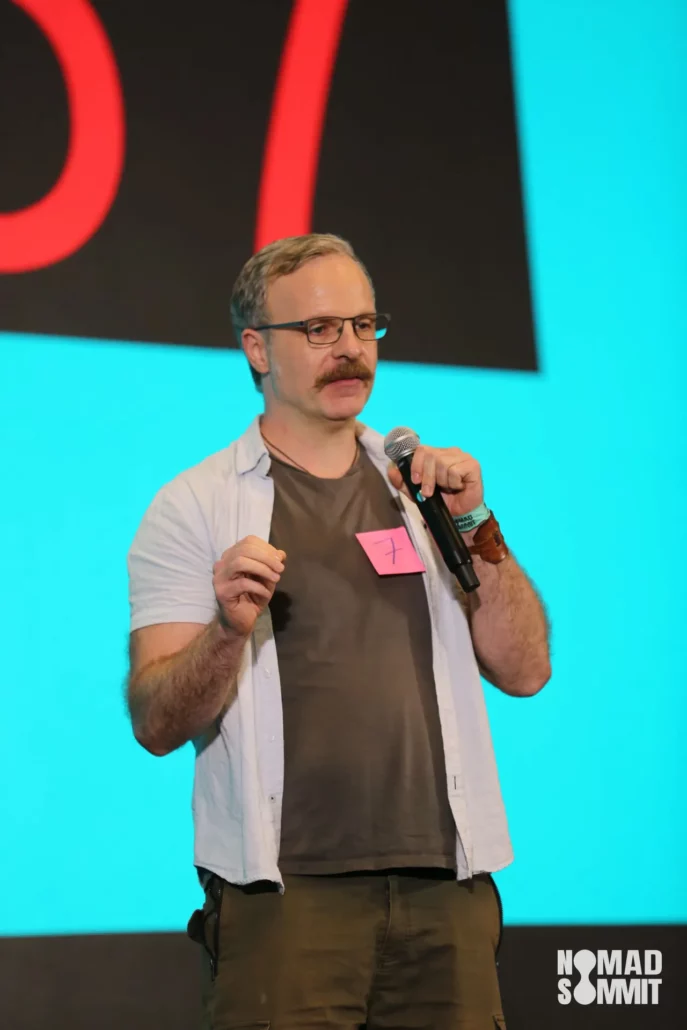
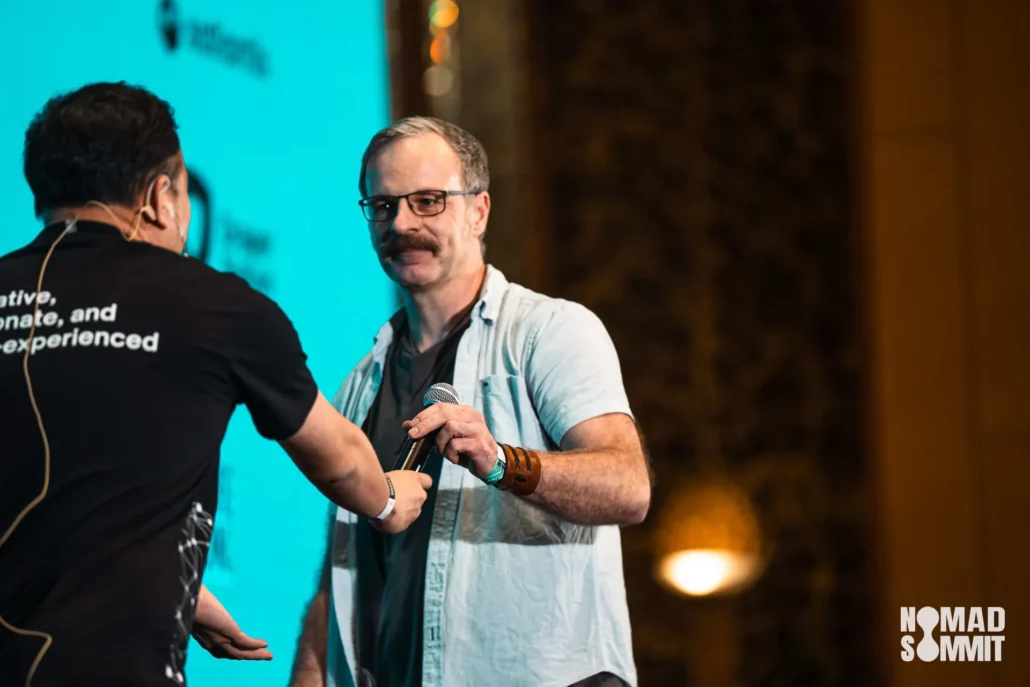
What happens when a seasoned translator and digital nomad turns a quiet frustration into a startup idea? In this episode, we sit down with Barny Mulcahy , the winner of the Nomad Summit Buildathon 2025 in Chiang Mai, to explore how he's helping authors and creators localize their content for underserved language markets.

Barny Mulcahy
A seasoned translator and digital nomad, the winner of the Nomad Summit Buildathon 2025 in Chiang Mai.
02 | Bridging Language Gaps: Inside the Nomad Summit Buildathon Winner's Project
Show Notes
What happens when a seasoned translator and digital nomad turns a quiet frustration into a startup idea? In this episode, we sit down with Barny Mulcahy, the winner of the Nomad Summit Buildathon 2025 in Chiang Mai, to explore how he’s helping authors and creators localize their content for underserved language markets.
Barny shares his journey from legal publishing to digital nomadism, the turning point brought on by the pandemic and AI, and how his new company, My3PO, aims to bridge linguistic and cultural gaps around the world.
You’ll hear about:
The power of small teams
The realities of language accessibility
And how Buildathon gave Barny the push to launch a mission-driven business
This episode is a deep dive into the intersection of tech, language, and impact.
Bridging Language Gaps: How a Nomad Translator Turned a Big Idea into a Global Startup
In this episode of the Nomad Summit Podcast, we sit down with Barny Mulcahy, a long-time digital nomad, translator, and the winner of the 2025 Nomad Summit Buildathon in Chiang Mai. What began as a frustration with underrepresented languages turned into a startup idea that wowed the judges – and could change how content reaches non-English speakers worldwide.
The Problem: Great Ideas Get Lost in Translation
While working as a translator, Barny realized something striking: millions of valuable self-published books and online courses never reach global audiences because they’re only available in English. And yet, over 6 billion people on the planet don’t speak the language fluently. His idea? Build a full-stack platform that helps creators translate, localize, publish, and promote their work in underserved languages.
From Buildathon Underdog to Startup Founder
Barny’s idea barely made the cut for the Buildathon – his team was just big enough to qualify. But that ended up being an advantage. With a lean and agile team, they were able to pivot, adapt, and evolve the project on the fly. What started as a simple translation concept grew into a more ambitious multi-lingual publishing platform called My3PO.
Why This Startup Is Different from Traditional Translation Services
My3PO isn’t just a translation tool. It’s an ecosystem that handles everything from cultural adaptation and localization to marketing and customer support in new markets. Barny explains how they blend traditional linguistics with AI tools to deliver fast, cost-effective, and emotionally resonant translations that go far beyond Google Translate.
A Project with Real-World Traction
The startup is already off the ground. Their first project is translating a best-selling book called Money Grows on Trees by Jerremy Newsome into German and Spanish. And they’re not stopping there – Barny and his team are actively looking for more authors, collaborators, and potentially angel investors who align with their mission.
Working as a Global Team of Nomads
Running an international team across time zones isn’t easy – but Barny shares how they make it work. From virtual working sessions to plans of future coworking meetups, he highlights the importance of staying connected, motivated, and aligned while living in different parts of the world.
Winning the Buildathon Was Just the Beginning
Barny reflects on what the Buildathon meant to him – not just as a competition win, but as validation for a long-held idea. It was the push he needed to go from freelancer to founder. Now, with a functioning LLC and a small but passionate team, he’s focused on building something that truly has global impact.
Final Thoughts: Language Shouldn’t Be a Barrier to Knowledge
In the closing moments, Barny shares his deeper motivation: to break down the invisible walls that language often creates. By making knowledge more accessible across cultures and languages, he hopes to contribute to a more connected and inclusive world.
If you’re an author, a publisher, or someone passionate about language, entrepreneurship, or the digital nomad lifestyle – this episode is for you.
Sponsor’s note
This episode is brought to you by Visit Estonia. If you are looking for a beautiful place to explore and to work from then Estonia should absolutely be on your radar. Estonia is one of the most digitally advanced countries in the world – and home to a thriving digital nomad and startup scene. With Estonia’s world first digital nomad visa (launched in 2020) you can live and work there legally for up to a year. And Estonia’s e-Residency Program enables you to open a company there and run it digitally and remote by design without ever visiting the country (but we still recommend you to come and have a look).
Cofunded by the European Regional Development Fund.
Key Takeaways:
Why 6 billion people are left out of most digital content
What makes true localization more than just translation
How Barny’s Buildathon team turned a small idea into a scalable platform
The challenges of founding a business as a nomad across time zones
Why his project isn’t just about books – but about connection
Relevant Links:
Buildathon pitch video: YouTube
Barny’s pitch deck for My3PO
Contact Barny: [email protected] or [email protected]
Jerremy Newsome’s book Money Grows on Trees
Barny’s book pick: Into the Wild by Jon Krakauer
See transcript
Palle: Welcome back to the Nomad Summit Podcast, where we dive into the people, places, and ideas that shape the global nomad movement. Today we're joined by someone who's been a part of the Nomad Summit family since before the world changed way back in Chiang Mai Pre COVID. His name is Barny Mulcahy. And he's been a professional translator, a location, independent entrepreneur, and now a Buildathon winner. At this year's Buildathon, a week after the Nomad Summit in Chiang Mai in January 2025, Barny and his team pitched an idea, aiming to help authors and publishers localized books in unserved languages, and the jury loved it. So today we're going to explore his nomadic journey, how he runs a translation business on the road, what went down at the Buildathon, and what's next for the winning idea. My name is Palle Bo, and with me is Christoph from Nomad Summit. Christoph: Hello from Estonia Palle: Barney. Welcome to the show. Barny: Hello everybody. Nice to meet you. Palle: So Barny, I'm curious, you and I, we've been nomad since, 2016 and, what's your travel style like? How much do you move around? Do you have a home base? Barny: Good question. Yeah. I know that my traveling style has become really like more like a slow nomad ding. I have slash had my home base in Columbia, not in Medellín, a little bit outside, but I'm really thinking, I just fell in love with Tallin so much that I might actually move there. So let's see about that. But yeah, in general I'm thinking about having like two or three home bases. So it's gonna be Europe or Germany and, Thailand and maybe Columbia. So I would say is that slow travel. Something like that. Yeah. Palle: Slowmad’ing. Barny: Slowmad’ing. There we go. Yeah. Palle: This episode is brought to you by Visit Estonia, the most digitally advanced country in Europe and virtual home for many digital nomads. Christoph: Welcome Barney. We have invited you because you are one of the O.G.s of the Nommed Summit. I remember you and me meeting in Chiang Mai. I guessed it was end of 2019 before the last Nommed Summit, or even the year before. I'm not quite sure. And this year with our first one coming back after the long COVID break, you were among the attendees as well. So that alone hints that you have an interesting story to tell being a nomad, a location independent entrepreneur for quite a while. So please give us a little insight in how that journey went for you. Where it started and, and what happened. Barny: All right. Well, I'm happy to talk about my journey. It started in 2016. It started with just an extended holiday after, after leaving… I worked for Universal Publishing, but, the record publisher and I just, I was just sick of the corporate world and just went to India and just spent my, the money I got for, what do you call it, to leave. And after a while I decided like, I want to continue doing this. And well, I just stumbled upon being a former legal manager that I could actually use my, my skillset in law, and also being English and German descendant, I could, could kind of mix this together by working as a translator, as a specialized translator, which I did. And it worked really well. I really liked that job. But, I think, and when we met Christoph, things, were still going quite well, but really everything started when COVID hit. It was just. All of a sudden massive jobs. And I couldn't, I couldn't, I had more, jobs than I could, was able to do. And, and all of a sudden it was just like, “oh, wow. How would I pay my rent?” More or less. I was always able to do it, to do that, but this was the first time that I was, was confronted with, oh, this is not as stable as I thought it would be. yeah. And, in the last two years with the rise of AI, translation just went down and down and the, the jobs became smaller and smaller and, there was an idea that I had around 2019, reading a very specialized super niche ebook that was in English, and I was like, oh wait. It was about relationships, a very specific kind of unhealthy relationships. And I thought like, wait a second. There's such a big market of people who would also need to read this, and many of those just don't speak English. What about these people? I know that there are published books, there are many books that are translated to other languages, but what about these millions of interesting, good reads that I just never make it to being published by a big publishing house. So that idea kind of started working in me for quite a while. And, yeah, and then Corona hit, my usual work, just declined, and I, had this idea. things just came together that I had to attend the summit. That was really funny because it was kind of destiny that I was there and I, when, when there was a call for ideas, I was just like, okay, I got to work. Walk up that to that stage bar. Clip from pitch: Barny. Welcome to the stage. Woo-hoo. Stage all yours. Barny on stage: Alright. Hello everybody. The language of the internet. Is English 1.5 billion people speak and understand English. 6 billion people don't. So that means if you are an author of an ebook or you are a creator of, of an e-course, you're missing out on 80% of the market that you could reach. So authors traditionally do that by getting signed by a big publishing company, but then you need to be really successful to be just in a position to be signed for another country to be translated and marketed there. The other way you could do it is you just do it on your own. I. You have to speak the language of that new country though, because otherwise you have to hire a complete team and they have to be reliable in all of that, which is a pain. So I wanna close that gap. I wanna launch a company that is a one-stop solution to help, creators and authors to, launch a market that is, uh. non-English speaking, and I want to do the entire process from translating a localization to publishing marketing, everything. Like we can even do a customer support or local website that's related to the product. So I want, creators to be creative and want to help them to connect their content to the non-English speaking world. And that's my idea. Christoph: Palle mentioned it in his opening words already. There is something that brings all this back together with Nomad Summit and your journey, and that was this year's, Buildathon, like an idea that's, crossover of hackathon and actually building something. So the tagline of this year's Nomad Summit was for people passionate about building and looking into the team and how Kai and myself first met on a hackathon here in Estonia back in 2019. It was clear we cannot have a nomad summit without. Hackathon or something alike. And so it was especially her big passion project as a part of the Nomad Summit to call for ideas, call for teams of people who really want to build something that is new that is. Maybe disruptive and that will outlast Nomad Summit for the foreseeable future. And it looks like you as the winner have created something that just had it like its starting point at this build fund. So please tell us how that went for you. The Buildathon itself. Barny: Of course. Yeah. So first of all, before the Buildathon, there was this, we had to present our ideas, right? And it was, I think it was 20 ideas. And then the ideas were sketched by an artist and people who wanted to participate in the, in the bill of law, they had to kind of vote their teams. There was this minimal threshold of five participants. So if you have five people, you get in round two. And, my project was, we barely made it above the threshold. There were teams who had like, I don't know, 15 members. I was really like, oh God. So we barely made it. Yeah. The next day we actually, we, we met and, started building and we, the team was like, we were four people, everybody. It was really cool because we first of all thought, like, I think all of us were very, humbled by being the smallest team, which is barely five people. And there were teams with 15, 16 people. But after a while working together, we realized that it's actually a good thing that we're so small, you know, like what they say about many cooks. So I really, I was totally amazed by this team being very, very highly adaptable, really focused. Just having an idea and walking down that road, especially with, with Marco, who's still on the team. We're gonna talk about that later. But we were able to switch the idea because my basic idea was. Yeah, having an English author that we, that we, bring into the Thai culture, but one of our team members pointed out that it would be a, the other way around would be really interesting too. And that's how the idea, how we have it now also expanded to a little bit more of that. So a multi-language way of publishing books. So not just one directional but multidirectional. So when we presented our idea, we were quite hyped about what we have to show here. So we had like this a publisher's way of just having your local market until it's released in other countries and other, languages. And, we really liked our idea, but the other ideas were also very strong. So honestly, I, we didn't really think we, we would win. So, but in the end, when we did win, we were really, super thrilled and you can see the pictures that we are just grinning without, without being able to stop. He says, we know you look stupid, we just don't care. So that was quite fun. Palle: So Barney, can you explain, because it's not something new that if you have a book in Thai or any language that you can translate it into English or into another language, what is it that makes what you do different? Barny: So, great question. That has been also one of our key insights is. Who needs another book? Who needs another ebook? There are million eBooks out out there. So if you release another, let's say you are an author from Germany, 'cause I'm German, so, and you are able to translate it to English maybe on your own. But what about these other markets? So let's just say you have your book translated into Spanish and it's translated well. So it's not just translation by the way. It's really adaptation of like speaking to the people, like, like making them feel what you're actually, what the author actually meant. So using totally different analogies, stories, currencies, for instance. But what we found out what is very important is to really, bring the author and the potential reader that only speaks another language together. So we, we have found out that specialized, tailored marketing is a really important part of what we want to offer. Palle: And how do we do that? Is it hands-on a person like yourself, a translator translating it or I. Is it AI based? just so that I understand. Barny: Yeah, that's a really important part. Also, we are, we are still finding the best way to do it as a translator. It is something where I use my old, translation models like, for instance DL and using the old software, but also, really working with. ChatGPT creating prompts where you kind of point out the language and the type of voice of the author, and we're kinda like, right now what I'm doing is mix, blend them together. Like, okay, I like this, I like this part, I like this part. So what we want to do is to really offer a high quality translational adaptational service from a translator, which is, we we're still looking for the right job description because it's, it becomes less and less translation. And we're also speaking with other translators. They're not very open to this idea. So we're more looking for linguists in these fields that are really excited about what technology can do, because. We want to offer really, cheap translation and adaptation, but with really great quality and the small turnaround time, that's also one of our, one of the important factors. Christoph: Do you see the bigger market potential of that? If you take. English books or books that are published in English in the first place and then localize them to many, many languages. Or do you first want to focus on authors that publish in a smaller to to a smaller language audience and bring them to the world market by publishing it in English? Barny: Well, first of all, the field that we first for the foreseeable future want to focus on is self-help, self-development books. Because if you go into the fiction, field, the voice of the author is more important than when with, for instance, self-help books, where the, the message is more important, you know, to keep the exact wording. The first book is going to be English. The author Jerremy Newsome, to German and to Spanish. So we're gonna test out these markets first. The German market is interesting because I can state it on my own. I can test out the mechanics and where, how we can really maximal use technology. The Spanish speaking market is extremely interesting and extremely more complex because there's so many different, so many countries, so many people that speak Spanish. And after that we are, we are already looking for books, like hidden Gems that are really interesting. For instance, our, our linguist who is from Columbia, he already had a couple of ideas, authors that would fill that, space really well. Some of them are published. Some we are looking for the ones that are not published. But we, we can also work with publishers where we would say like, all right, you would otherwise maybe not enter this market. We can help you, but we mainly aiming towards authors that have just really self-published their work and what we see potential. with Jerremy Newsome for instance, he has published his book on his own and he sold 300,000 copies in the US and he is, there's a massive traction because he also plans on becoming the next governor from California. So there's a lot of traction here that we, we want to use. And this book is really cool. It's called “Money Grows on Trees”. Yeah, game of words, right? It's money doesn't grow on trees, money grows on trees, but it, it has an interesting section, this book, which also really shows, it's a really interesting, first product because he talks about the different ways of expressing this idea. In Germany, for instance, it's, as you know, Christopher, it's more “money lies on the streets”. So we, which he goes into that and, that was a really interesting, like, thought process. How far do we deviate from the original wording? There are many things to think about because we have. Let's just say there's a lot of detail, a lot of interesting linguistic things to think about, but I think there's a massive potential there. SPONSOR: Before we continue, a quick shoutout to our sponsor – Visit Estonia. If you're a remote worker dreaming of a digital-friendly base in Europe, Estonia should be at the top of your list. It’s one of the most digitally advanced countries in the world, home to a thriving startup scene and an international community of nomads. There are two powerful ways Estonia can support your lifestyle: The Estonian Digital Nomad Visa lets you live and work legally in Estonia for up to a year – no visa runs, no grey zones. And if you're more interested in starting or running a business remotely, Estonia’s e-Residency program gives you access to their world-class digital business infrastructure, no matter where you are in the world. I’ve spent time there myself, and I can tell you – the freedom, community, and digital ease is the real deal. And in fact, Nomad Summit is registered as a company in Estonia for good reason. We’ve dropped the links to both things in the show notes. One detail that I'm super interested in from a perspective of being a Nomad Summit host is how your teamwork evolves now. Christoph: One detail that I’m super interested in is how your teamwork evolves now. So with the Nomad Summit, we are on a mission to be the platform for people along this traditional journey to financial freedom and location independence from being an employee to becoming a remote employee, a freelancer, a founder, and then ultimately business owner, living of dividends. So you have now told us the story of your transition from first being an employee to a freelancer. You've been working as a freelance translator for a long time, and it sounded to me like this is also your first serious major step into becoming a founder and working with co-founders on building a business. And as you found your co-founders at the Nomad Summit, I assume you are a location independent business. You didn't open an office somewhere. So how does that work with your co-founders? How is your day-to-day remote distributed team culture evolving? Barny: So we all work on different jobs, but we have twice a week we have meetings that are in three different time zones sometimes because one of our, founding members is right now in Europe, for instance, but he's from California, so he is kinda like all over the place. But we have, Marco, who's in Hong Kong and we have me, who's right now in Germany, but I've gotta be in Columbia. So there's always a little bit of a, when do we meet? We have that twice a week. We are having, regular meetings sessions where we just talk about, how to navigate things the next aims. But we also have working sessions where we really sit down for an hour and we just work. Because we found out it's really good to work together. I mean, the ideal thing is to really work together in person, which I could, because one of our team members was here, and it's just a different kind of energy, a different kind of drive that you get and you're motivated after that. So we were kind of having this typical remote thing, but we also all plan on being at the next summit, in Chang Mai. Where we, we might just extend our stay to work together for a couple of weeks too, because I think that's very important to at least partially work together in a physical same place. Yeah. Christoph: I’m super happy to hear that. Chang Mai is a place where I've also always come to stay for a month or rather two, as it provides the ideal infrastructure for remote work, but also just to work with everything you need around coworking spaces and, coffee shops and good food. But if you need an earlier occasion for that. We'll have a Nomad Summit here in Estonia in August as well. So if you want to bring your team together, I'm pretty sure we can support and help you find the right coworking spaces and the infrastructure that you need around in Europe. Barny: Ah, that's good. Interesting. Palle Bo: So what has it meant for you guys to win the Buildathon? What did you get out of it? Barny: Free tickets for the next summit. No, just kidding. No. like, mainly just, for me personally, it was just so cool to have an outside validation of like the stuff I'm thinking about, the ideas I'm thinking about that not just nonsense, they're actually, there's some. They, there's something that's valuable. So that just has a really motivational effect on myself and other ideas and projects that I have. But for this specific project, which is a really, a project coming from my heart, it was just like we were really excited about this and we were just directly after winning it, thinking of what's the next step? How can we go anywhere? And where Marco is somebody who's out of the field, he's been in the entrepreneurial field for quite a while. And he was also the first person that told me when I told the idea to a couple of guys at the summit, and everybody was like, “yeah, yeah.” And he was like, “that's a really good idea”. And he, with his background, was a very big motivation that someone like that, likes my idea. And he was excited. We all were excited. So it was, we tried to carry that wave of motivation into actually working on the project. And I think we actually, yeah, we're still working on it. So yeah, it worked. Palle Bo: Do you have any advice for people thinking of participating in next year's Buildathon? Barny: Yeah. go for it. It's just amazing if it works and even if it doesn't work, that doesn't mean that anything is bad idea or something, but just to getting into the realm of working out on ideas or working on other people's ideas, just to build something and to create something that's in this creative process is extremely, how you say, verifying? It's just very. It fulfills a need that you didn't even know exists in you. It's really like, oh yeah. It's so fun to create something from scratch with other people. Yeah. That's really cool. Christoph: Very happy to hear, and especially when one of the, I mean, there are hackathons happening all around the world all the time, especially in this major innovation hubs of where startups thrive. But what we wanted to create and bring to life for the first time with this very local and international integration. So like bringing all these international entrepreneurial minds to Chang Mai, but also activate the local community, the university, local startup, hubs of Thai people that so far barely had contact with international collaborators. So I think you had some Thai people in your team as well, right? Barny: Yes, we had a Bank who was a really good UE designer who, who helped us. Really well. And also he was the one who actually gave me that idea of like, maybe we should do it the other way around. So that was really cool. Like his suggestion, like thinking out of the box, he had made that suggestion and I was able to see his point. So, and we kind of changed the concept and that shows how good the team was. We were able to kinda like turn everything around in the, I would say like we were one third done. Then we changed everything. So I really liked it. I don't think that would've worked with a big team, for instance. So, and we also had Alexandra, on our team who was, who jumped on board and it was the creative mind behind getting all these ideas together. So it was really cool. It was a really cool way of working. And, I also wanted to give out a shout out to all the Thai people because. I could see how shy they were in, like, in the interaction with us, within how they presented it. And, and I would love to see them being more confident about this because they have so many great things to give and so much knowledge and everything. I would really love to help the Thai culture to become a little bit more, yeah, I would just say just like show, be aware of their own worth so there's no international competition that they should feel. That they can't live up to. So they're great people, friendly people, but also really, really competent and phenomenal coworkers as well. Christoph: You have won this Buildathon and it really looks like you are on an interesting trajectory with what you're building here. You have sent us your pitch deck beforehand to have a look, and I guess we'll come back to that in a second. But, at first, I mean, the typical question every location independent entrepreneur and founder has, did you incorporate that as a company already? And if so, where and why? Barny: Well, the funny thing is that My3PO, which is our name, like it comes from a obvious, connection that I won't mention here. Whoever knows where it comes from or where it's similar to knows, but I actually founded that name as an LLC in the States two years before that. So just, it was just meant for my translation, translational adventures, but I never actually used it for that. So it's just perfect, like things just matched. That's why I actually have this LLC and now I can really use it. Christoph: So you chose one of those? Classic digital nomad setups of being a perpetual traveler and having a US LLC registered in America. Barny: Correct, yes. Christoph: Which is also a vehicle that is, I would say, quite useful when you look into funding. So, when I looked into your pitch deck, it sounds like you are currently on the hunt for the right angel investor. Barny: Yeah, that, that changed for instance, we're not so sure about this, so we are actually thinking about going the shoestring route just because it's mainly going to be… we need to build a good connection with authors. We need to have the brand that more popular and more known to the market. It's not that we are against angel investors, but we're not desperately looking for them right now. We're looking for collaborators. We're looking for people who really like the ideas. We are also really looking for authors that are interested in what we can offer with and that have our content that actually works to, with what we are looking for. But as investors, well, we can talk about this, but it's not like a “Please, investors come our ideas. Great. We need the money”. Right now we. We are getting to a point where we might, look for investors eventually, but it's not necessarily our main aim right now. Christoph: So currently you're still bootstrapping and you are solving the, the problems now first among your team. So what, what is the current problem? What is your, the bottleneck, that you're currently working on? Barny: Well first of all, I want to highlight that we all are aware that AI is changing everything. So, and it's totally possible that in the not too far future, many things of, of these things, for instance, the translation, adapting and keeping everything very localized is something that we can really. That will not be necessarily the thing that we solve best because there are gonna be more, many competitors. What we want to establish is a funnel that works already where we can just like, provide even cheaper translations, you know, and cheaper steps. The bottleneck right now is, I would say, first of all, like having a good setup that we know, like creating a, a good funnel, creating the secret sauce to have everything pre-translated in a way for different languages that work well, where, where the linguist has a little bit of work. I would say right now the bottleneck is, still the translation adaptation part that takes longer as it should because, we want to provide a cheap solution, but we also want to provide a really good solution. So, finding that and finding the right people for that in the right languages, that's still, that's going to be an interesting field. Yeah. Also we want to, first of all, our marketing steps are going to be, because books sell different than many other products there. Many of them work with, word of mouth. So we, we want to get readers, we are looking for readers that actually give reviews, like honest reviews, real reviews, and to just get the word of mouth out there for, for books. Christoph: Well, if you imagine that this, podcast has an infinite number of listeners and you have now the opportunity to shout out to them, so who of them should call you? Who of them should send you an email Barny: Authors… Publishers that are, independent publishers, I would say that, like the idea that want to, want to work with us or with part of what we offer, angel investors who like the idea so much that they want to contribute, even though we might not get into direct discussions about that, but just to plan, a way that we could work together in the future. And everybody who's listening who wants to know more, I'd love to share ideas and share, ways of making this a be even broader idea. My passion about behind this is just to, to remove the limitations of language, you know, to certain specific thing. I really think that was part of my main presentation. We all assume that English being the language of the internet, is understood by everybody on earth and living in Colombia, for instance, I think 4.6% of the Colombians speak English. You know, that was my motivation for like, it's such a massive market out there and we in our little bubble, we just don't see it. Palle Bo: Yeah. Being a book guy, I just have to ask you before we wrap this up. What is the one book that we nomads, location independent entrepreneurs should read? What is your recommendation if you could only pick one book? Barny: Hmm. The one book. I actually think it's “Into the Wild” because this is a guy who went where many nomads actually dream of going and he experiences something for us that tells us how important it is. No matter how independent driven you are, you need community to a certain extent. I think it's something that really. It saves you a lot of pain and it shows you, you have to kind of like keep it together no matter. And endless freedom people say is endless falling. There's truth to that too. Palle Bo: Mm. Yeah. And that's made into a movie as well, right? Barny: Yeah. Yeah. Great book. Great movie. Palle Bo: Barney. It was such a pleasure having you on the Nomad Summit Podcast and if people want to reach out to you. Where can they find you? Barny: Alright, cool. this is the first time they can officially use my, our company email Uhhuh. So it's gonna be [email protected], and that's B-A-R-N-Y without an e. I think in [email protected] works just as well. And yeah, please feel free to, to contact me. It'd be nice. Christoph: We'll put that in the show notes, in every channel, where we publish this podcast. So wherever you're listening this right now, you will find the contact information of Barny and most probably also the link to the video recording of all the pitches leading up to the build fund in Thailand. Palle Bo: Looking forward to seeing you again, maybe in Estonia in August or, if not before, then in, Chiang Mai in January 26th. Barny: Perfect. It's been a pleasure. Thank you for having me. Thank you.
Keep Listening
EP. 43 · Mar 2026 · 33 min
43 | Meet the Students Who Won the Nomad Summit Buildathon
with Jack & Nay
What happens when a group of students meets at a hackathon-style competition with only a short time to build something meaningful? At the Nomad Summit…
EP. 39 · Feb 2026 · 25 min
39 | Kevin Hofmann: From Broken Jaw to Building a Cleaner Planet
with Kevin Hofmann
Kevin Hofmann went from getting his jaw broken at a rave in Vienna to building impact‑driven tech projects as a digital nomad. In this episode, he shares how…
EP. 76 · Oct 2026 · 29 min
76 | Is Asia Becoming the Future of Digital Nomadism?
with Miho & Daniel Beck
Asia's digital nomad scene is evolving fast – and it's no longer just about Chiang Mai and Bali. From the Philippines to Japan, China, and beyond, new…
Oct 2026 · 29 min
75 | 70% of Her Team Is AI – Meet the Egyptian Entrepreneur Building an AI Empire
with Rania Esmael
What if you could run a business where 70% of your team consists of AI agents? And what if one of those agents even applied to be a guest on this podcast…
EP. 74 · Oct 2026 · 23 min
74 | Italia Nomad Fest: Building a Digital Nomad Community in Palermo
with Marco Traina
What makes a place feel like home when you're a digital nomad? Is it the weather, the food, the people, or something deeper? In this episode of the Nomad Summit…
EP. 73 · Oct 2026 · 26 min
73 | Is SEO Dead? What Actually Works in the Age of AI
with Kyle Roof
Is SEO really dying, or is it simply changing again? In this episode, Palle Bo and Christoph Huebner sit down with SEO expert and entrepreneur Kyle Roof, who…

Never Miss an Episode
Get new episodes, event announcements, and nomad insights delivered straight to your inbox.