EP. 4 · JUN 11, 2025 · Accommodation · Nomad Hotspot · Africa · Travel & Lifestyle
04 | Emerging Digital Nomad Hotspots for 2025: Insights with Chris Cerra
In this episode of the Nomad Summit Podcast, Palle and Christoph sit down with Chris Cerra, the founder of Remote Base and Digital Nomad Trip Reports. Chris shares his expert insights on the next emerging digital nomad hotspots for 2025 and beyond.
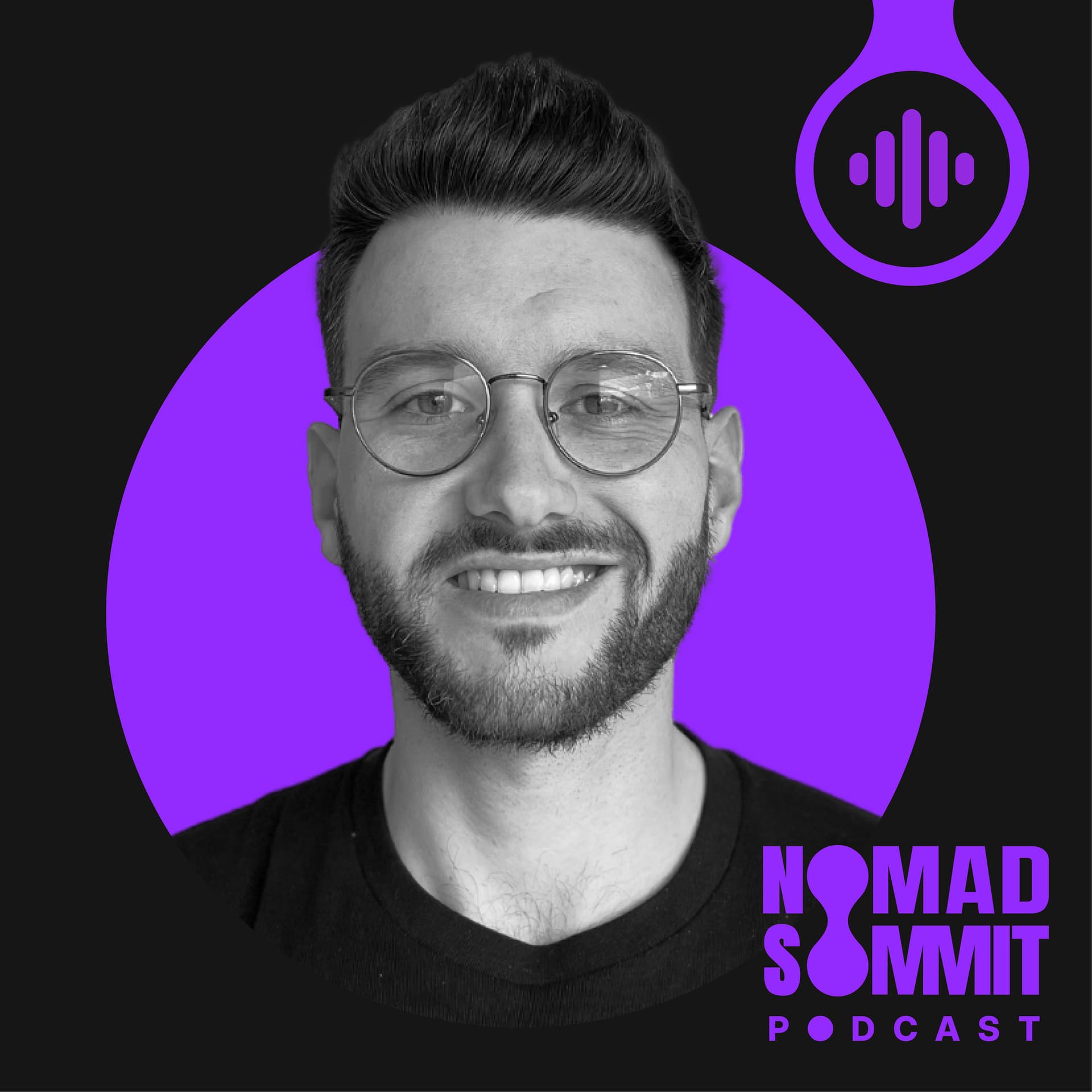
Chris Cerra
The founder of Remote Base and Digital Nomad Trip Reports.
04 | Emerging Digital Nomad Hotspots for 2025: Insights with Chris Cerra
Show Notes
In the latest episode of the Nomad Summit Podcast, hosts Palle Bo and Christoph Huebner sit down with Chris Cerra, the founder of Remote Base and Digital Nomad Trip Reports, to explore the emerging digital nomad hotspots for 2025 and beyond.
Africa: A New Frontier for Digital Nomads
One of the most exciting insights from this conversation is the potential for Africa to become a new frontier for digital nomads. Chris shares that places like Tanzania and Morocco are starting to appear on the radar, offering a unique blend of affordability, adventure, and cultural richness that appeals to nomads looking for something beyond the usual spots.
The Evolving Appeal of Major Cities
While digital nomads traditionally flocked to affordable destinations for geo-arbitrage, Chris notes a growing trend: more nomads with established, well-paying jobs are now seeking vibrant, established cities. Places like London and Barcelona, despite their higher cost of living, are attracting remote workers who want the best of both worlds – cosmopolitan experiences and strong infrastructure.
What Makes a Destination Truly Great for Digital Nomads
When asked what separates a good destination from a truly great one, Chris highlights the importance of community and adaptability. It’s not just about cheap rent and fast internet – it’s about whether a place has an established or growing community that makes it easy to integrate and feel at home. Flexibility and the ability to cater to the influx of remote workers are also key factors.
Trends in Co-Living and Home Swapping
Chris also discusses the evolution of nomad-friendly accommodations. From the “co-living bubble” of the past few years to the emergence of professionally run, community-focused spaces, the landscape is changing. He sees co-living becoming more refined, with only the best concepts surviving and thriving. In the longer term, he predicts a rise in home swapping and other alternative living arrangements that cater to the needs of digital nomads.
The Biggest Mistake Aspiring Nomads Make
Perhaps the most powerful insight Chris shares is that the biggest mistake new digital nomads make is simply overcomplicating things. “Just book a flight,” he advises. The biggest hurdles are often internal – doubt, fear, and hesitation. Once you take that first step, everything else can fall into place.
Join the Conversation
This episode offers a wealth of practical insights and real-world experience for anyone thinking about embracing the digital nomad lifestyle. Whether you’re just starting out or you’ve already packed your bags, Chris’s perspectives will inspire you to look beyond the obvious destinations and find your perfect spot.
Sponsor’s note
This episode is brought to you by Visit Estonia. If you are looking for a beautiful place to explore and to work from then Estonia should absolutely be on your radar. Estonia is one of the most digitally advanced countries in the world – and home to a thriving digital nomad and startup scene. With Estonia’s world first digital nomad visa (launched in 2020) you can live and work there legally for up to a year. And Estonia’s e-Residency Program enables you to open a company there and run it digitally and remote by design without ever visiting the country (but we still recommend you to come and have a look).
Cofunded by the European Regional Development Fund.
Key Takeaways:
Africa is emerging as an exciting new destination for digital nomads.
Established cities like London and Barcelona are becoming increasingly attractive for remote workers.
Community and adaptability separate great destinations from merely good ones.
Co-living and home swapping trends are evolving to meet the needs of nomads.
The biggest hurdle is often just making the decision to start.
See transcript
Welcome to the Nomad Summit Podcast – your go-to resource for all things digital nomadism. My name is Palle Bo, and together with Christoph from the Nomad Summit today, we’re diving into the Emerging Digital Nomad Hotspots for 2025 with none other than Chris Cerra from Remote Base. Chris has been at the forefront of discovering the best places to live, work, and thrive as a nomad. From his experience running newsletters like Remote Base and Digital Nomad Trip Reports, he’s seen first-hand where the community is headed and what’s changing. Here’s just a taste of what to expect in this action packed episode… We’re going to ecplore what regions of the world could be taking off in the coming years: CHRIS: “Africa could be a thing.” We’ll be talking about what separates good spots from truly great ones: CHRIS: “The vibe – is there an established community?” And we’ll go into how to actually start this lifestyle: CHRIS: “Don’t overcomplicate it. Just book a flight.” We’ll cover all that and more – from the shifting landscape of nomad hubs to the evolving digital nomad lifestyle and what it really takes for a place to go from good to great for remote workers. So grab your coffee – or maybe your next plane ticket – and join us as we explore the future of nomad life. Welcome to the Nomad Summit Podcast, episode 4. Emerging Digital Nomad Hotspots for 2025: Expert Insights with Chris Cerra. Palle: So, Christophe, I call you Chris sometimes, but I think today I'm gonna call you Christophe because otherwise, it's gonna be confusing. Christoph: That's fine. Palle Because our guest is Chris, Chris Cerra from Remote Base and so much more. Welcome to the Nomad Summit podcast, Chris. Chris: Thank you, guys for having me. I'm really excited to be here, and I will look forward to being called Chris. I'm hearing Christophe being called Christophe. Palle: Anyway, we asked you to be on the show today because we are going to be talking about the emerging digital nomad hotspots for 2025. Christoph: Yeah. And beyond 2025. We wanna look into the future with that one person that has probably most insights on where nomads are going, staying today and in the future. So, we had to invite Chris Cerra, who runs the Remote Base Newsletter, sending out great deals on accommodation every week, but also holding keynotes on trends in nomad accommodation at conferences all around the world. That's how we first met. I think in the Canary Islands, we first were spending some time together in a co living that was brand new in Gran Canaria and since then have been kept in touch and also welcomed Chris at this year's Nomad Summit in Chiang Mai in January. And today he's our guest here in the podcast. So maybe, Chris, you want to give our listeners a little bit of background about yourself, how your location independent journey started, and where you are today? Chris: Yeah. That's probably a good place to start. Like a lot of people, I was working a normal job in London and the UK. I'm originally from the UK. That was back in 2018, and I was fortunate enough to be able to work anywhere. Company was quite flexible and that set me out on this path of trying to go to different places and wanting to spend extended periods in certain places, living there, working there, absorbing the lifestyle there. And it was really through that that I discovered or decided that I would launch what is now Remote Base, the Remote Based Newsletter. So, I was finding all of these crazy accommodation deals where if I booked for one month or longer, I could unlock a juicy discount. And, eventually, it made sense to share these deals with other people that I met and other people who were either already living this lifestyle or they wanted to live this lifestyle, and this could be a resource that helped them do that. And that was how Remote Base started. That was 2019. And over the years, I've grown the newsletter. As Chris said, I have been talking about this topic on stages around the world at different community events and conferences and gone on to launch other newsletters that some of them also serve this community of this donor. And, yeah, I kind of transitioned out of my job, my regular job into now, I guess, I would say I'm like a professional email nerd. And that brings us here today to this conversation. Palle: Yeah. And you also now do the Digital Nomad Trip Reports. Chris: Yeah. This is another email newsletter that we share. This is weekly, and this is to kinda capture the conversations. Like, I think the three of us have had basically this exact conversation, either you and I, Chris, in Agate or me and you, Palle in Bansko. Like, we go to a location, and you instantly have these connections where somebody's coming from the place that you're going to or vice versa. And there's this, like, download exchange where you're sharing all of the tips and the real insights of the location. These conversations echo around co living spaces and co working spaces all around the world in the community, but there's no real way to take those conversations and make them one to many. The idea with Trip Report was to try and do that, is to try and take that conversation and make it one to many. So, you can submit a report for Chiang Mai or for Bansko or somewhere else, and we then basically amplify that and share it with all of our readers. Christoph: And I guess you get a lot of feedback on that. There there is a a reverse direction that people respond to those emails or submit reports. So I guess that gives you a great overview and database on what's hot and what's not. Chris: Yeah. I mean, you're right. Like, people see the reports and then it becomes an idea. Like, oh, I can submit a report myself, which is nice. It's kind of like it grows organically that way. But, yeah, you're right. Sometimes we get reports for the established hotspots. And other times, I get a report in, and I'm like, oh, we have a new report. Let's go check where it's for. And I'm totally shocked because it's for, like, Washington or some really rogue place that I wouldn't normally think is a destination for digital nomads. Palle: Yeah. I've been looking at the list that you have and, I'm in Cape Town right now. So, I've I read the report from Cape Town, and it's very useful information, especially for somebody who's about to go there or about to decide. You also have, like a top five, and that's Cape Town, Tbilisi, Madera, Kuala Lumpur, and Porto right now. But I guess that changes over time. And I also took a look at the Nomad List now, nomads.com, and their top 10 is Bangkok, Barcelona, Lisbon, Canggu Bali, Kuala Lumpur, Tokyo, Dubai, Chiang Mai, Tbilisi, and London. So, there are some usual suspects on there, but some of them, I wouldn't normally see them as, nomad spots. Like, London is so expensive. Yeah. It's wonderful, but it's I wouldn't see that. It's a nomad place. Are you getting some surprises on your list as well? Chris: Yeah. It's interesting. We definitely get stuff that is more surprising. For me, it's I always try to think about, like, what's driving this. And I think, like, that list that you just mentioned from Nomad List, there seems to be a lot more, like, bigger cities. So, London's a great example. Right? Like, if you're in The UK, London is the place where it's like, that's where you wanna go. If you wanna get a good job, that's where the jobs are. That's where, like, the economy is excellent, and you can go there and it's full of talent and the lifestyle is great and all this other stuff. And more and more, like, around the world, I think we're seeing these places become the kinds of locations that digital nomads are attracted to. And I think if you then peel back the layer on that again, it's like, well, why is that? And I think maybe it's because there's more variance in the kind of people who are exploring this lifestyle. I think it used to be typically considered that digital nomads wanted to go to cheaper locations. They wanted to go and experiment with geo arbitrage, and they wanted to go and earn dollars and spend in pesos or whatever. And I think that's maybe changing now. I think more people come into this lifestyle with an established well-paying job to, like, traditional job, but they just have the freedom to be remote now. And now they can explore more of the more expensive cities. I also think digital nomadism is maybe evolving. I think it's been around for a long time. It's not anything new, but I think maybe it's evolving into this era where it's kind of growing up. I feel like it's in its, like, adolescent era. It's kind of, like, becoming more normal and more established and more mainstream. And so, it can't really exist solely on the fringes in these small areas where people can experiment with a cheaper lifestyle. It has to kinda, like, become more or fully formed, I think. I don't think I'm really articulating these ideas very well. They're just kinda, like, pockets of thoughts in my head that I'm staying out, but hopefully it makes sense. Palle: So, obviously, when we're looking at, the classic, nomad hotspots, Chiang Mai, Bali, Lisbon, what are some of the emerging destinations for 2025 and beyond that you're most excited about? Chris: I think Africa. I think Africa could be a thing. There's so much variance. You look at what the nomads like. We like stuff that is typically quite different and maybe a little bit more fringe, but we also like variants. And Africa's broad. Right? Like, we had trip reports. And one of the things that we do Remote Base; we let people submit their own property to share with our readers. Ones that came in was in Tanzania. And I was like, okay. That's cool. That's interesting. That's not really a place that I'd thought of, but I can see the appeal. When I think about it, I can see the appeal. There's also, like, there's hubs emerging in places like, Morocco. So, I think over time, like, I'm curious to kinda watch that bubble away. Palle: Yeah. And the Internet is getting better, which is important. Chris: Yeah. Internet getting better. And I think while that happens, those kinda locations will retain cost effectiveness. And then on the flip side, if we look at the more kinda established or, like, first world destinations, I'm really curious to see, like, which of the other established cities will pull digital nomads to them. Like, I think you said that, London is in that list. You said Barcelona is in that list. I think Barcelona's been a huge hub for, like, international communities for years. But I'm curious, like, what other cities do we know and love are gonna, like, start to repeat with the London or the Barcelona? I also think that the Schengen Zone is expanding a lot, and I wonder how that will impact people's willingness to spend time in different locations and which countries on the fringes of the Schengen Zone will be able to capitalize. I know that there seems to be a lot more happening in Montenegro at the moment. I'm here in North Macedonia. Yeah. I think there's, like, opportunity for those countries. Christoph: Schengen Zone is quite an interesting keyword here now as I'm always a little bit curious when I hear these conversations. As a Schengen passport holder myself, it doesn't feel like a restriction, but like an added freedom. And for people who do not have a Schengen passport, it's the opposite. As communities are quite big both inside and outside, I wonder what's actually the impact on those trends. Like, there was this big discussion about in the community when, Bulgaria joined, Schengen – First by air traffic only and then also by land and sea borders. Do you see how much that actually has a positive or negative effect on nomad travel? Because, yes, there is a bunch of, of non-Europeans inside Europe travelling around for who Schengen has a negative connotation as a restriction to their travels. While on the other side, there are so many European, like, in this sense, like, domestic travel within the Schengen zone that I feel like probably the positive impact for people inside Schengen is much, much bigger than for those couple of Brits and Americans and Australians who would then apply for a proper visa instead of having their regular ninety days within one hundred and eighty days. So, do you have any numbers or or something tangible on this? Chris: Nothing tangible. Nothing like, I'm not collecting data on how many days people spend in places and why but looking at broader changes over the last five-six years through things like Brexit, and I guess personally, right, like, I've kind of experienced both sides of the Schengen experience. I have been able to wander freely and love it, and I hate the fact that we still don't have that. So now I'm on the flip side. All of that combined, I think you're most likely gonna just see more competition. I think it's about competition for the internal Schengen countries, like destinations like Bansko that now has to compete with places like Lisbon if people are coming from outside. If you're inside, great. It makes no difference. But I think Lisbon is a really interesting case study because, you know, way back when, like, five plus years ago, they seem to really want and drive for international visitors and for people to come and spend a long time there and to kind of plant flags for their life there. And they got everything that they asked for and more. And quickly, it swung into a situation where Lisbon has more foreign people than Portuguese people, and there's a lot of animosity, you might say, about foreign people in in Lisbon among the locals. And so let Lisbon be a lesson almost to other Schengen locations. They're now in competition for people who are coming externally, but do they really want that? What happens if Bansko turns into a place where 70% of the population there is from The US Six Months of the year? That's crazy. So, Schengen, non-Schengen, what trends do I see? I think if you're on the fringes of the Schengen, countries where I am now, like in Macedonia, I think they'll benefit from more people doing, like, the Schengen shuffle. It's a big reason why I started to explore this region, and I really like it. It's a place where increasingly every year, I spend a little bit more time, and I'm I don't think I'm the only person doing that. In fact, I know I'm not the only person doing that. And so, I think long term, maybe there's additional impacts and knock on impacts, positively for these countries, at least initially. Palle: So, what do you think separates a good no man's spot from the truly great ones? Is it the hardcore things like cost of living or Internet speed or is it more the vibe? Chris: That's a really good question. I think there's two answers to this. It's all done. I think it's yeah. I mean, you call that the vibe. I would say, like, is there an established community or is there a growing community? Because I think it's really, really difficult if you go somewhere you have, like, a subpar experience. It's really hard to give it a second chance or it's really hard to wanna go back there. If you get that right, then people will wanna come back. So, I think short term is that. It's like creating the right environment for the first landers or the first time somebody lands, which is a bit “chicken and egg”. Long term, I think it's about nomad infrastructure and actually, like, life infrastructure and adaptability. I think it's really important for places to be able to adapt, almost like flex with the traffic of nomads. I think seasonal destinations do this really well initially, but then a great example of this is Split in Croatia. Really love it, but they've obviously got this, like, muscle memory for its high season. Everything flexes, and there's all of this infrastructure and things to do, and it's great. And then in the wintertime, all of that kinda shrinks and it goes away, and there's not really much happening. It's not great, in my personal opinion, in those off seasons. So, they have the ability to flex, but I think there's this other thing happening, which is this mentality is ingrained. They have the ability if they want to let that infrastructure flourish for it to stay flexed for the entire year. Croatia was running this initiative at least a couple years ago now. It was like “Croatia 365” where they wanted to make it like a year-round destination, And I think that would be great. They could probably make a lot of success out of that. But I think from a private business perspective, it's like they almost like requires a mentality shift of, like, they make all their money in the summer, and then they don't have to work very hard in the winter. That's a great life for them. Why would they wanna you know, Croatia 365 is great as a government initiative to help their economy grow. But, like, if you're a private business owner, if you can make hay when the sun shines and then have a break, why would you not necessarily wanna do that? So, I think adaptability and flexibility and being able to grow with the emergence of an of an incoming nomad community, I think that's something that really separates the great from the good. Christoph: That's an interesting point and especially, when we come back to what you mentioned earlier, Africa. So, I totally resonate with your answer here, especially seeing that it's such a big, continent with so much variety. But when I look into the community and where people are going today, visually speaking, the extreme points of this continent, so it's Morocco, it's Egypt, and it's South Africa. Maybe a little bit of Tanzania, but that's like if you connect those points on the map, then there is a big void in the middle. There are these huge differences in this massive continent. Is there something that you, Chris, see particularly as upcoming? Something like a white spot on the Nomad map? Chris: No. I don't think there is like a I don't think there's like you can spotlight one place. I think that will emerge. What you're saying will definitely happen. Like, there'll come a point where it's clear there is this white spot, but I don't think I don't even think we're there yet. Like, everybody is seeing, everybody has the same perspective and relative closeness to this topic as you and I will probably see the same thing. Like, people around the fringes, places like Rwanda, places like Kenya. I think that has to happen. This is almost like this very early stages, And soon, as people become more comfortable, I think people have a lot of preconceptions about Africa, like safety or Wi Fi and stuff like that. And I think it's gonna take time for those early explorers to basically get really comfortable in places like Morocco and get really comfortable in places like South Africa and then slowly expand into other African countries. But I just see it being like, it's one of the places that is so, so different from anywhere else, and it's so, like, untouched. So, I think that's where I see, like, the opportunity. I don't think there's, like, here's one major country that you must visit in Africa because in five years' time, it's gonna be the biggest nomad hub in the world. I can't sit here and say that, unfortunately. Christoph: We're trying to tickle that, out of you but I see. It's not coming. It's not that clear. It's not that easy. And I remember listening to one of your keynotes a while ago where it was not so much about the destinations, but about the type of accommodation, where you were telling a little bit about the emerging style coming from Airbnbs and now going more to co-livings, and everyone, at least, like, two years ago, everyone wanted to open a co-living and they popped up like mushrooms everywhere. And I have now spent myself, quite a bit of time in different co-livings in different countries, including the first one where the two of us actually met in Agaite, on Gran Canaria. And now over the last Nomad Summit in Chiang Mai, we have stayed with the entire team for actually two months in Alt Ping River of John Ho, for sure one of the flagship, concepts and brands of this community. How do you see this trend now in terms of, adaption by our community? Chris: It's probably good to add context on that keynote that you're referencing. The keynote was the future of nomad accommodation, and it wasn't really a very short-term view. It was more of like a medium to long-term view of, like, where I think things will go. We talked about all different kinds of accommodation options, but I think home exchange or home swapping would become something that is way more prevalent in the next five to ten years. So, when I say medium term, that's the kind of length of time that I'm talking over. And I think that was, like, part of that prediction is kind of considerate of this evolution of a more developed or more organized and mainstream version of digital nomadism, which is that almost every remote worker is at some point gonna go and do a two month or three month trip somewhere, whether they're by themselves or as a couple or in a family or whatever. And that largely more and more people who are experimenting with digital nomad life may be homeowners. And so that was really the context on that. You know, I feel like what you're asking is a little bit more short term and therefore means that I can't be so abstract. And so, I think co-living is actually since giving that talk, I think there's been changes in co-living. There was definitely this, like, I would kind of reference it now looking back as a bit of a co-living bubble where the world emerged after COVID and people wanted to socialize, and people wanted to experiment with this lifestyle. And I think largely what happened was people went and experienced the co-living space, and they were like, this is cool. I'm gonna do one. And then even though maybe they had no skills or experience in what that would entail, honestly, I think it's a really hard business. The people who do it right, like, you talked about John, absolute legend. Like, developing all into what it is, I think, is incredible. And I see how much work John puts into that, and I see that he was able to use the network that he has in that location and build a community. I think it's incredible. I think it's really hard if you are somebody who works in X and you wanna open a call to be space in a country that you only arrived in last month and you have no existing network there. You don't know how business works there, I think that's really, really hard. And I think what we saw between two years ago was a lot of that. Probably a period from about, like, two years ago to about a year ago, maybe even six months ago. Like, so many different co-livings, so many different co-living centric businesses. And a lot of them, I think, yeah, I think it's a really hard business to run. I think a lot of people realized after a while, like, maybe this isn't what I wanna do. But what it meant is that so many stuff got put in the top of the funnel. So, there was loads of really, really loads of ideas went out. Some of them failed. Some of them fell off, and some of them disappeared, but some of the really good ones stuck. So now we're seeing places like, there's a place you mentioned Barcelona being a a hub. There's a place in Barcelona called Wonder House. And all their positioning, all of their marketing, like, the voice, like, how they portray that brand online is brilliant. And I can see how that's gonna develop and evolve for them really well into the future, especially if we're talking about Barcelona being one of the hubs or one of the emerging hubs or I mean, it's already like an established international hub, but that is, I think, what's happening with co-living. I think we got kind of all of the nitty gritty ideas out of the way. And now the seeds that did start to grow are gonna take root, and they're gonna evolve. And hopefully, we see this, like, emergence of more of the kind of caliber of co-living that we have with all. We see that in different places around the world, and we'll see more brands like that emerge. That's what I think will happen with Co-living. Christoph: Yeah. Sure. I mean, if you look at the successful concepts, you see exactly the answer to what you've just mentioned. I mean, John Ho is, someone with long professional background in hospitality and so a successful concept of, of a great co-living is basically nothing else than a boutique hotel combined with community management, plus co-working facilities, like a co-working space and a good chair and a table in the room. But in the end, yeah, it's a boutique hotel so it needs professionally, business wise, needs to be run like a boutique hotel with those factors added and that succeed today are more likely those that actually do have the hotel management background. Chris: Makes sense. Palle: So, Chris, for someone, thinking about becoming a digital nomad in 2025 or maybe next year, what are some of the biggest mistakes you see people making and how can they avoid them? Chris: I think probably the biggest mistake that I see people making by far is not to do with anything external. It's always self-sabotage. It's always, I don't know if I can do it. I don't know if I'm ready to do it. I don't know how I do it. And I think one of the biggest things I say is just like, just do it. Just book a flight. Don't over complicate it. It's really, really simple. If you can work online wherever you are and you wanna experience digital nomadism, just go to, like, the next town and go and work in the town that's, like, 50 miles down the road, and that's, like, stage one. And then then go further and then go to the next country or, you know, the next state or something and just go further and further away. And I think slowly you realize that actually it's like it's not … no one's gonna give you a certificate that says you're a digital nomad. You just need to book a flight. And when you get to the other end, you realize that you connect to the Wi Fi, and you do your job in the exact same way as you did before. And, fundamentally, if you can get that nailed, then you can worry about all of the other stuff afterwards. You know? Worry about things like how difficult it is to manage time zones and how to find your accommodation and how to find your community. Do all that after. If you don't know how to do the work if you can go and find a community somewhere, great. But if you can't also do the work at the other end, then that's gonna be your like, that's fundamentally how you make this happen. That's your personal source of revenue. So, look after that first and let the other stuff follow. Christoph: Or if it's actually that important, for you to get that certificate that you're a digital nomad, I will personally write year one when you show up to the Nomad Summit Remote Work Edition in Tallinn, in Estonia in August year. That's a good starting point as well, where you can not only learn by the brightest minds in this community how to land your first remote job, you can also talk to potential employers of yours at the job fair that we are hosting, and you will meet many other like-minded people who might be at the same stage or even a step ahead of you. And if you, by the end of that event, really, really want a certificate, come find me. I will give you one. I will give you your digital nomad diploma. Palle: Haha. Written on a napkin. Christoph Chris, have you been to Tallinn? I've not been. I've not been to Tallinn. Chris: No. I know. I should come. I know. Keep telling me to go. Christoph: August is a great month to experience a beautiful summer here. Just saying. Chris: I think that's definitely more appealing than visiting in the winter. So, yeah, maybe when I do get there, it'll be it'll be through this through the summer months. Can I have, like, a nomad certificate backdated? Christoph: I will make that happen for you. Chris: Thanks. SPONSOR BREAK Palle: You mentioned that the digital nomads are more grown up as a community now than it was just a few years ago. How do you see it evolving, that nomad lifestyle evolving, in the next two-three years? Chris: I think the shift will be like, oh, the best way to describe this shift is that in terms of labels, some people say digital nomad, some people say workation, some people say traveling remote worker. And I think that hopefully in the next two or three years, I think maybe some of these labels will lose their shape. And I think maybe there'll be some amalgamation, and people will just say, “I work. I have a job”, or “this is what I do for work”. And I just think there'll be less emphasis on the fact that it means you can do all of this stuff because that will just be taken completely as a assumption, I think. Christoph: Yeah. And travel lifestyles are quite different as well. The more I'm around this community myself, I, observe with myself that it's always like a pendulum. I love to be with community, and I love to spend two, three months, in Chiang Mai, where I have that all day around me with a lot of inspiration from morning to evening. But then I also need this pendulum swinging in the other direction where I'm traveling alone completely without any internationals, just deep diving into local culture and exposing myself to a local community. That's the bouncing between digital nomadism and travelling. There is an overlap between the two things, but for me, the freedom of working location independently is one that I would want to use to dive into local communities and cultures, and not just hang out with the international tribe all the time. Is this a trend as well or do you see groups of people that are travelling with their community all day every day to different countries? I mean, the Nomad Cruise community, for example, has definitely elements of that, of people that flock together and then go to cities and spend breakfast, lunch, and dinner with the same people and explore cities together all the time. And then there are others that barely show up to a community event like a Nomad Summit and then vanish into the vastness of this globe again. Chris: Yeah. This is an interesting topic. Like, this could probably be its own podcast. Right now, I'm in North Macedonia, and I'm just hanging out with Macedonian people all day. There's a bit of an international community here. Like, there's obviously some tourism, but, like, I'm in the co working space. Most people here are from here. There's the occasional person coming in who's not, but it's likely a more local experience. And this is like monk mode for me. Right? This is after having done lots of the travel type that you're talking about where you're just really immersed, really involved in all of the community stuff, constantly around people, having ideas, brainstorming, doing collaborative stuff. Now this is my season of calm and my season of focus. So, yeah, I think this is more personally driven. I think there'll always be these really sociable beings, like you said, who they wanna constantly be around other people. Maybe they work in a creative field. Maybe they're just very extrovert, and that's what they enjoy. That's what energizes them. But I think that's part of the beauty of it. You know? I'm definitely more of a “pendulum person” like you, I swing, but everyone's a little bit different. Everyone's pendulums will swing at a different cadence. I think there's a lot of variances to it for different people. Christoph: That's a great final word for this recording, I would say. Palle: Thank you so much for being on the podcast, Chris. It was a pleasure and so much insight. Chris: Thank you for having me. This is my second podcast with you, Palle, so I will look forward to many more. I hope we do lots more together. Palle: Yeah. We, met in Bansko, and you were actually in seven podcasts. Chris: So, this is number eight. Yeah. Christoph: Thank you very much, Chris. That was a great insight on the fact that there is not this one place where everyone will meet in 2026, but it's getting much more diverse, more countries, more cities popping up. And one that definitely is an important place on my personal nomad map is Estonia, also the sponsor of today's episode and the hosting country of the next Nomad Summit in August. Thank you, Chris. Next week, we will talk with Aliza here about another aspect of Nomad lifestyle, and that is, the dating scene, how to make a transition from a solo-traveller to a traveling-couple. And in the week after, we will cover digital nomad visas. Palle: Thank you again, Chris. And we will make sure to put the links in the show notes on where people can find you, all the things you do, and, great seeing you again. Chris: Thank you for having me, guys. I really appreciate it. It's always fun to talk about these topics, especially with some of my favourite people. So, thanks for having me.
Keep Listening

EP. 69 · Sep 2026 · 27 min
69 | How to Stay Fit as a Digital Nomad – Even When Your Routine Falls Apart
with Riley Schinella
What happens to your fitness routine when your gym, kitchen, schedule, and time zone keep changing? In Episode 69 of the Nomad Summit Podcast, we talk with…
EP. 68 · Sep 2026 · 32 min
68 | When Digital Nomads Eventually Need a Base
with Francesca Ciucci
What happens when location independence stops feeling like an adventure and simply becomes your life? Francesca Ciucci has spent 14 years living abroad across…
EP. 53 · May 2026 · 33 min
53 | From a Small Village in Uganda to Tech Entrepreneur in Dubai
with Elias Hezron
In episode 53 of the Nomad Summit Podcast, we sit down with Elias Hezron for a fascinating conversation about ambition, opportunity, remote work…
EP. 51 · May 2026 · 27 min
51 | Horizontal vs. Vertical Travel – The Mindset Shift Most Nomads Miss
with Ilona Vinogradova
In Episode 51 of the Nomad Summit Podcast, we sit down with Ilona Vinogradova – a former BBC journalist turned global traveler who challenges the very idea of…
EP. 49 · Apr 2026 · 27 min
49 | Bonus Episode: China for Digital Nomads – Worth It?
with Christoph Huebner
Digital Nomad in China – The Reality In this bonus episode, we wrap up Christoph Huebner's four-week journey through China and take a closer look at what it's…
EP. 19 · Sep 2025 · 27 min
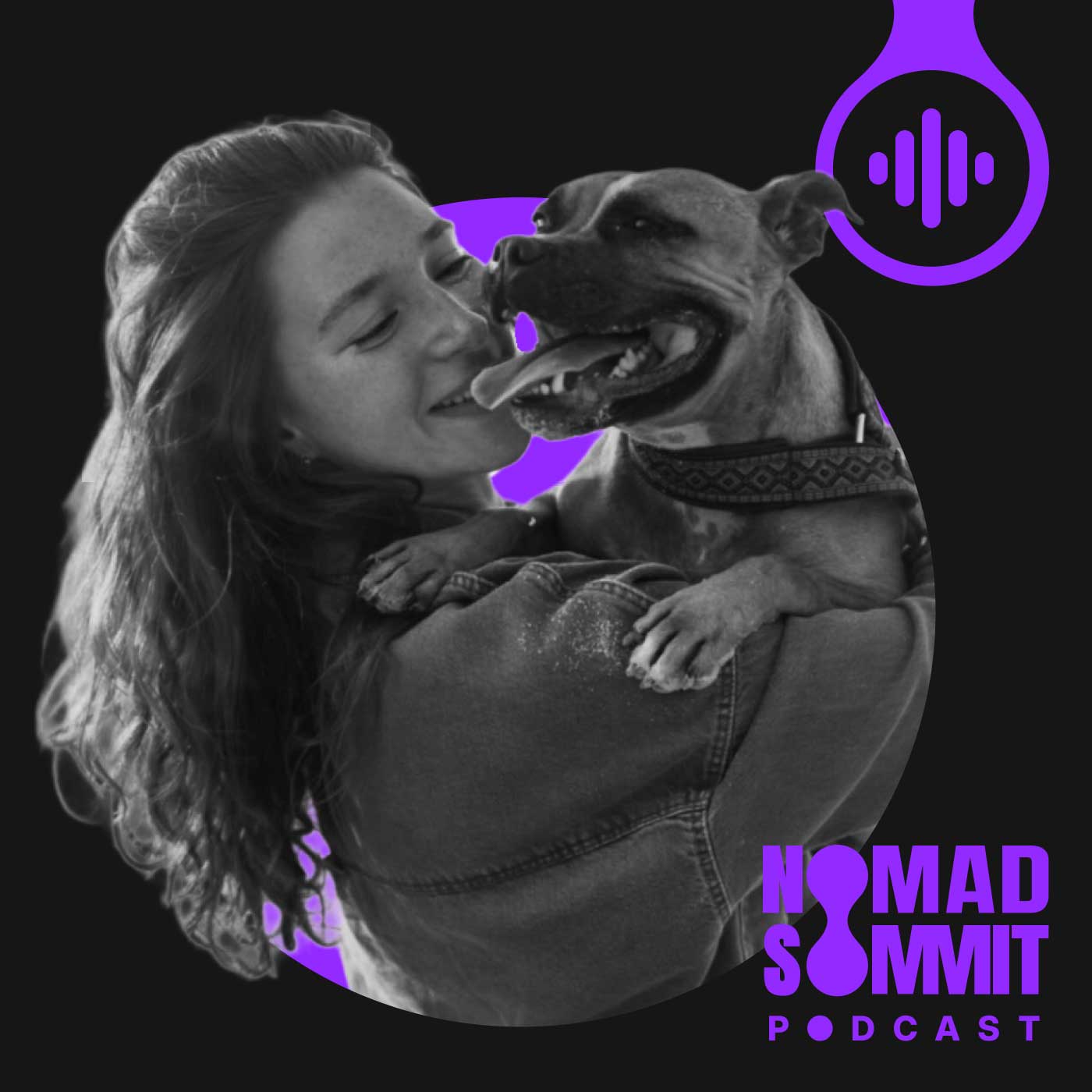
19 | Around the World with a Dog – Sonia's Journey from Russia to Argentina and Beyond
with Sonia Vainshtein
In this episode of the Nomad Summit Podcast, Christoph Huebner sits down with Sonia Vainshtein, a digital nomad who has built her life and business around…

Never Miss an Episode
Get new episodes, event announcements, and nomad insights delivered straight to your inbox.