EP. 7 · JUL 2, 2025 · Bansko · Bulgaria · Global Nomad Pass
07 | Banitsa, Bansko & the Bigger Picture: Why Supporting Local Matters
In this episode of the Nomad Summit Podcast, we're coming to you from the heart of Bansko, Bulgaria, where digital nomads and local entrepreneurs are reshaping the town's economy. Host Christoph Huebner sits down with Safir Jamal, founder of Global Nomad Pass, and Hristina Zlatinova, owner of the popular café and bakery Lubanitza, to explore how intentional spending can empower communities – and why your coffee choices matter more than you think.
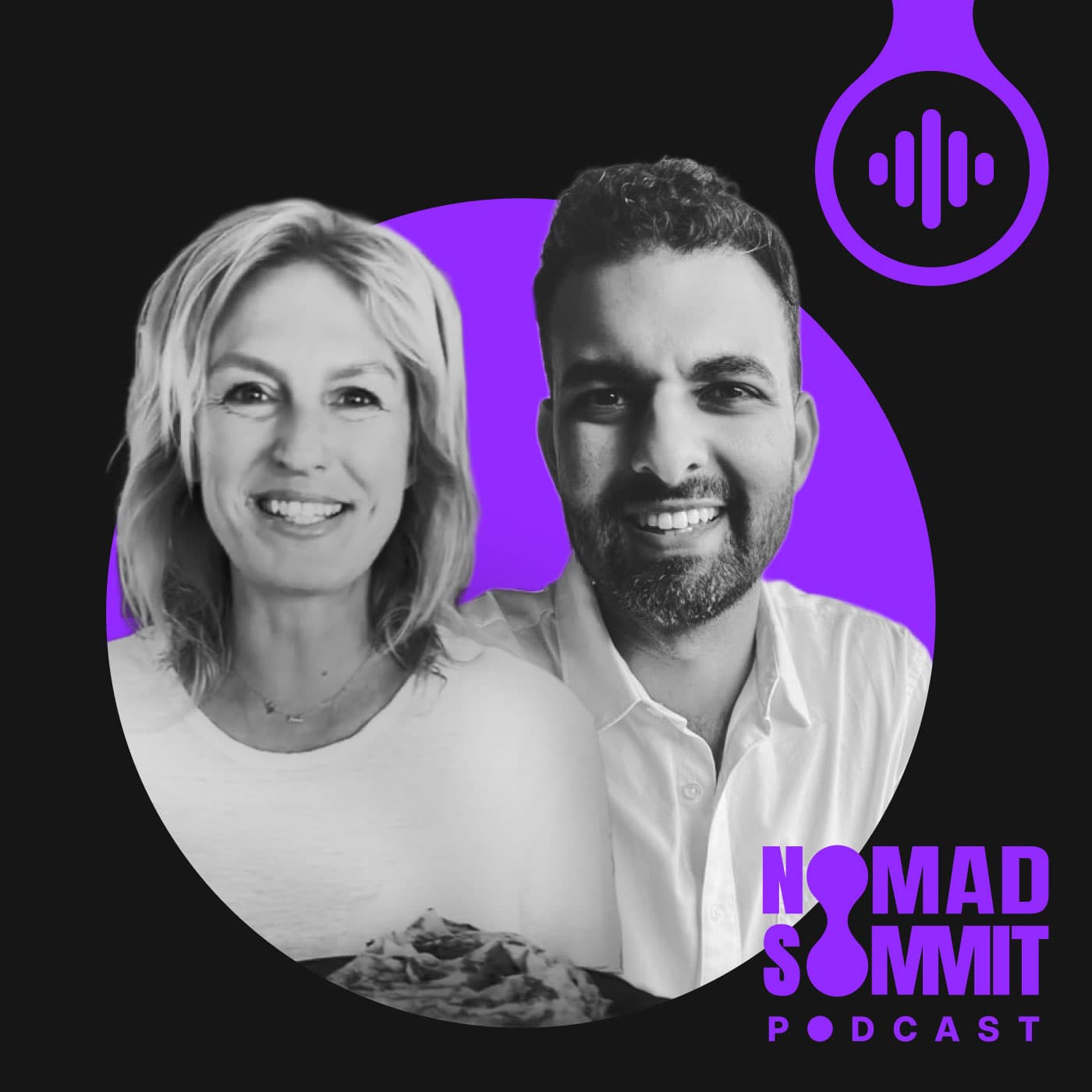
Safir Jamal & Hristina Zlatinova
Founder of Global Nomad Pass & owner of the popular café and bakery Lubanitza.
07 | Banitsa, Bansko & the Bigger Picture: Why Supporting Local Matters
Show Notes
What happens when digital nomads don’t just visit a place – but actively help it thrive?
In this episode of The Nomad Summit Podcast, host Christoph Huebner sits down with Safir Jamal, founder of Global Nomad Pass, and Hristina Zlatinova, a local entrepreneur in Bansko, Bulgaria, who is turning a traditional pastry into a modern-day movement. Together, they explore the real economic impact of digital nomads and how simple, everyday choices – like where you get your morning coffee – can have powerful ripple effects.
How Digital Nomads Are Changing Bansko for the Better
Bansko is known as a ski resort town that typically sees bustling winter crowds and quiet off-seasons. But that’s changing. As digital nomads have started flocking to the area, especially in summer, the town is finding new life year-round. With high-speed internet, affordable accommodation, and an emerging community, Bansko is becoming one of Europe’s most underrated remote work hubs.
In this episode, Hristina shares how her family-run bakery, Lubanitza, is flourishing thanks to this influx (find them on Instagram). The café specializes in gourmet Banitsa – a traditional Bulgarian pastry – using locally sourced ingredients. She explains how word-of-mouth, support from the Global Nomad Pass community, and her choice to keep the space Wi-Fi-free have all created a unique experience that brings people together.
Find Lubanitza here on Google Maps.
The Mission Behind Global Nomad Pass
Safir Jamal opens up about his journey through 90 countries and the realization that not all travel spending benefits local communities equally. That insight led to the creation of Global Nomad Pass – a membership that connects travelers with authentic local businesses and gives them perks for spending money where it truly matters.
With presence in over 25 cities, Global Nomad Pass isn’t just a tool – it’s a movement. From Buenos Aires to Bali, the platform is empowering travelers to support barbershops, cafés, fitness studios, and other locally owned gems.
Intentional Travel and Local Impact
One of the episode’s most important takeaways is this: nomads have the power to be more than just visitors. When you choose a locally owned café over a global chain, 100% of your money stays in the community. That’s not just economics – it’s a statement of values.
The conversation also highlights how long-stay nomads contribute differently than short-term tourists. They form bonds, leave five-star reviews, return for second and third visits, and often become unofficial ambassadors for the places they love.
What Happens When You Travel Without Wi-Fi?
Hristina’s approach to running Lubanitza is refreshingly different. She’s intentionally created a “Wi-Fi-free zone” where guests are encouraged to unplug, enjoy artisanal food, and connect with each other in person. It’s a reminder that digital nomadism doesn’t have to mean heads-down screen time in a café – it can also mean slowing down and soaking up local culture.
Plans to Scale, Collaborate, and Go Global
Both Safir and Hristina share their dreams for the future. Safir is now partnering with tourism boards – including a new deal with Marketing Greece – to offer free passes to travelers entering the country. Hristina, meanwhile, is exploring how to franchise her gourmet Banitsa concept in other Bulgarian cities like Sofia and Plovdiv, with Global Nomad Pass right alongside her.
This episode is a great example of how the Nomad Summit Podcast is more than just talk – it’s about building bridges between nomads and the places they call home, even temporarily.
Sponsors Note: GigSky
This episode is sponsored by GigSky, the global eSIM provider keeping digital nomads connected in over 190 countries. Whether you’re working remotely from a beach in Bali or a café in Lisbon, GigSky lets you stay online without the hassle of local SIM cards or overpriced roaming fees. We love their flexibility, transparent pricing, and how fast you can get connected – all from your phone and without changing the eSIM.
Bansko, Bali, Berlin – or even on a Cruise: Stay connected wherever your journey takes you.
Key Takeaways from This Episode
- Digital nomads have a real opportunity to support local economies in meaningful ways.
- Spending money at local businesses keeps more revenue in the community.
- Bansko’s transformation into a year-round destination is fueled by nomad presence.
- The Global Nomad Pass is changing how and where nomads spend.
- Lubanitza is blending tradition and innovation with Bulgaria’s most beloved pastry.
- Building human connection – offline – is still one of the most powerful parts of travel.
Tune In and Travel Intentionally
This episode offers more than insight – it offers a challenge to think about your impact as a traveler. If you’re serious about making your remote lifestyle sustainable, for both yourself and the communities you visit, this conversation is a must-listen.
See transcript
Christoph: Welcome to a new episode of the Nomad Summit podcast. Today, we talk about the local impact of digital nomads. My name is Christoph Huebner, and with me, I have Safir Jamal and Hristina Zlatinova. Hristina, who are you? Hristina: I'm Hristina. All people call me ET since I was a baby, and I'm the creator of the first brunch place in Sofia, the capital of Bulgaria. But we got tired of Sofia after thirty years, and now we the for the last two years, we're in Bansko, and we created a new concept for Gourmet Banitsa. Safir: And my name is Safir Jamal, and I'm the founder and CEO of a company called Global Nomad Pass, which is a membership that rewards travelers with exclusive discounts when they support local businesses all around the world. Christoph: And today, we're sitting here together in the walking street of Bansko. So, if you hear some background noise, that's because we're sitting in a cafe, in a cafe with the owner of this cafe. And we have now the very rare opportunity to talk to someone who caters locally. So, we often have this conversation, of the impact of digital nomads on local communities, local businesses, mostly centred around hospitality. We hear the discussions, from cities like Lisbon where digital nomads are blamed for the gentrification, for housing prices going up. And often, there are really, really good arguments if you look into the data and see that price changes are much more impacted by tourists. Digital nomads have a very small part in that, and we barely hear the voices in those conversations about people who are actually running places, who own restaurants and bars, and that's what we wanna talk about today. And one person who has made this topic, his life passion is Safir. So Global Nomad Pass is not just a way for digital nomads to get local discounts but has a bigger mission. So, Safir, what is that mission? Safir: Yeah. You know, for me, I've been a traveller my whole life. Ever since I was a child, I've had the privilege of traveling. And, you know, after having visited close to about 90 countries, I was under the impression, like many of my fellow travelers, that, well, when I travel, I'm actually doing a good thing because I'm supporting the local economy of wherever I'm going because just by virtue of my presence, I'm showing up. I'm clearly spending money. My contribution is a net positive. And it's only probably about two years ago that I realized that that's not entirely true. You see, it's only when we spend money at local businesses that that money stays in the local economy. If I go to Buenos Aires or if I go to Lisbon, as you said, and I go to Starbucks and I buy myself a coffee, 85% of that purchase actually goes to Starbucks headquarters in Seattle. It doesn't stay in the Argentinian or the Portuguese economy. But if I were to buy that same cup of coffee from a local Argentinian cafe or a local Portuguese cafe, a 100% of that spend stays in the local economy. It goes to that local business owner. That owner uses it to feed their family, goes to the grocery store to buy groceries for, you know, the next day. They fix their shop's vinyl sign if it breaks down at a local shop. And so you're seeing that impact. And so once I realized that, Christoph, for me, it was an aha moment. It was this realization that as a traveller, I actually do have a choice. And that choice can either be one that strengthens or weakens the local economy. But it's up to me to have the information to make the right decision. Now I wanted to spread that with as many people as I possibly could, but I also recognize that we're not gonna go out of our way to just support local businesses. It has to be convenient, and it has to be high quality. Christoph: And so fast forward from your realization, today, we are sitting in one of those digital nomad hotspots in Bansko in Bulgaria together with Hristina who runs a cafe here. So, what is the impact of digital nomads on your business here? Hristina: So, we started this, bakery. It's a Gourmet bakery with artisanal Banitsa with farmers products from the region as well as, my signature desserts. We started it as a family business. So, it's me, my husband, my two boys, Theo and Adrian, 19 and 17, and my aunt. So, it is really wonderful how many international people come here to Bansko, come to our place. It's called Lubanitza. Lubanitza means love and Banitsa in one, and Banitsa is the most traditional pastry in Bulgaria. If you Google it, what is the one thing that you have to try in Bulgaria? It is Banitsa. And because of Global Nomad Pass, more and more people come to my place, not only for the free espresso, the free specialty coffee that they're gonna get, but they read about Lubanitza. They're attracted what we have to offer, and they just come and enjoy it, tell their friends who are also here. And it's growing, and it's wonderful. We've been here only two seasons, actually, two winter seasons as we call it in Bansko. And it's better and better. Christoph: Yeah. Seasonality is a big, topic here, and I've actually been this week now. I think it's my fourth time here in Lubanitza. So, it's definitely a place worth visiting over and over again for a good coffee and, amazing bakery that's all made here. But seasonality again, so Bansko is a place that's mainly thriving in the winter season. It is known as a ski paradise. People come here in the winter, and the city is buzzing, but in the summer season, it's usually, quite quite low. Until a couple of years ago, the digital nomads discovered this as a great place to come in the low season, have, very affordable accommodation and all the infrastructure that you need to work remotely. So, I guess there is a big impact on that for the local economy here to, counter seasonality. But still, I wonder, Hristina, you have this cafe, but you don't offer Wi Fi. Why is that? Hristina: I tell them it's a free space, and all of them think that this is a free Internet. I tell them, no no no. It's free of the bad frequencies. And all of them just look at me and, like, well, there are enough routers, antennas. Everybody has your Internet with you when you work remotely. We want to keep our place safe. We want to keep the energy high. We are creating amazing food, and I want it to stay like this. Christoph: So, you want people to talk to each other and not, sit in front of their laptop screens. And that's actually not really a problem here because there's so many co-working spaces around. So, actually, the location here makes a lot of sense if you're working in from one of those co-working spaces and you want a little break and get a good coffee and some pastry, you just walk here, sit, look, watch people, have a conversation at the table, and then return to your screen later. Safir, Bansko is just one of many, many cities, and now even countries where Global Nomad Pass operates. I think you first launched here in this village in the mountains of Bulgaria. Right? Close to it. Safir: Yeah. So, we started the company about eighteen months ago. Mexico City was our first destination. Bali was our second, but Bansko was our third. And we were here at Bansko Nomad Fest last year. And at the time, I would say that Bansko was the first destination where we really felt a different level of being embraced by the community of local business owners here. So, you know, Hristina, was one who was very curious about our ability to bring more international travelers, more digital nomads. I think Bansko has a special reputation as, as you mentioned, you know, being a very popular hotspot during winter. But the ability to counter seasonality, one of the biggest reasons for that is because the city attracts digital nomads. Digital nomads come, they don't stay for weekends like you might come for a ski trip. They stay weeks. They stay months. That means that they're spending a lot of time. They're spending a lot of money. They're making multiple visits. In those multiple visits, they're experiencing more menu items. They have more reason to write five-star reviews. They have more reasons to tell their fellow travelers as well. And so, you know, for us, that dynamic that we saw here in Bansko was unlike what we saw anywhere else. And then also just by virtue of being here one year ago during the Bansko NomadFest event, it really gave Global Nomad Pass an opportunity to get the type of awareness in the community that we hadn't seen before. And we've really been embraced by the community of nomads and the community of local businesses. And so fast forward a year later, you know, now we're in more than 25 cities around the world. We're continuing to see more and more business owners reach out to us who wanna be featured on Global Nomad Pass. We're seeing a lot more nomads use their passes in different destinations. And so, it's all part of the same mission. How do we make it as easy as possible for nomads and travelers to support local businesses? BREAK Christoph: Hristina, imagine for a second that Safir is not sitting at this table here. What is your relationship with people coming in, showing their their wallet file? Do you see that they come more often? Did they discover your place? Did they did they spend money here? Hristina: Once they discover it and they love it, they come back. And they come back for the food, for the atmosphere, for meeting, new friends, and, to get their free specialty coffee, of course. Everybody enjoys it. Christoph: Yeah. I've, myself, used Global Nomad Pass now in in several places, including Chiang Mai and, also in Da Nang, where you recently launched, around the Vietnam Nomad Fest. So you are, not only with your business, but also as a person, very well integrated in an integral part of our digital nomad community. Right, Safir? Safir: Thank you. Yeah. Absolutely. I'm a nomad. I very much live the lifestyle myself, and that's also why I feel so passionately about this particular business is that for me, it's it's very personal. I really try to build personal relationships with as many business owners as I possibly can. Hristina has my personal WhatsApp number. She messages me with any questions or any opportunities, and I do that with, you know, now more than 650 business owners around the world. We use different apps to be able to translate when we don't, speak the same language. For me, it's very personal. I come from a family of entrepreneurs who are all, local business owners themselves. Everything from restaurants to clothing stores. I know how hard it is to run a small business. I know how hard it is to run a local business. And so anything that we as a company and I as an individual can do to bring more awareness, bring more visibility, bring more foot traffic to these individuals. I mean, we're certainly gonna use, you know, all the powers at our disposal to do that because at the end of the day, if we don't, what is the world going to look like? It's going to look like a lot more McDonald's and Starbucks is on every block. And if that's the case, why travel? Why travel? I don't need to travel to go see Starbucks in 15 different countries. I travel for uniqueness. I travel for cultural immersion. I travel for authentic experiences. And I feel like there's genuinely this inertia that is taking away from all of that. And so this is our opportunity to counter that and to do what we think is right. Christoph: 650 restaurant and bar owners on your WhatsApp. Yes. How do you scout them? Safir: So, I fundamentally believe when I travel to a new destination, it's easy to look up Google reviews and it's easy to look up TripAdvisor reviews. But who wrote those reviews? Fellow tourists. Well, I actually don't wanna go where other tourists went. I wanna go where locals want me to go. I wanna seek out local recommendations. How do you do that? You gotta talk to locals. And so, our model is in each destination we operate in, we hire local teams. We hire local teams who know their city best, who speak the local language, who can actually build that local expertise, and we ask them, I want you to tell me your favourite cafes, restaurants, coworking spaces, accommodations, fitness studios, barbershops, salons, spas, and they have to be local. They have to be authentic. They have to be hidden gems. And tell me a place that you've actually gone to as a local. So, these aren't tourist traps. These are places that you can handpick and say, “yes. I think this is great because I've gone here. These are the menu items you should order.” And then we work with the owners of those businesses to negotiate what type of exclusive discount our members can receive. Christoph: What's the exclusive discount that people receive here at Lubanitza? Hristina: They have a free specialty coffee upon arrival when they scan the Global Nomad Pass QR code. Christoph: That's pretty cool. I've seen in other places that there's like a percentage discount or something like that. In some places, it's a bit restricted. It only works on specific workdays or for specific payment methods, like only if you pay cash. So, the place owners have some ways to, yeah, incentivize people to come, for example, at your load times. I remember in Danang, there was a place that, gave the discounts, basically between lunch and dinner. They have more capacity. So how does it work for for the places? Safir: We genuinely partner with the business owners. We don't charge them any money. We don't take a percentage. We don't take a commission. We genuinely want to support them by promoting them on our socials. We write blog articles that talk about them, so it helps them with their SEO. I run a podcast, and it allows them to, you know, come on the podcast and get featured. And it's all in the interest of supporting them with more awareness and visibility totally for free. In exchange, we ask the business owners to offer an exclusive benefit to our Global Network Pass members when they come up and they showed their Global Network Pass in their mobile wallet. Now because of that spirit of partnership, we don't impose any type of restrictions on the type of deals or the discounts that local business owners can offer. They can offer whatever they want. We have a lot of data. So, we're happy to provide them with data on the type of deals that we've seen redeem best. So, you know, if they wanted to offer a 5% discount, by all means, they're more than able to do that. We're happy to publish that on our platform. However, we can tell them that, look, typically, we see 15 or 20% redeem higher. Now it doesn't mean that it's restrictive. It's just data. You do what you want with that data. We're here to guide you, but not necessarily to restrict you. You can also change your promotion whenever you want. So, we have many owners who actually message me on WhatsApp saying, okay. You know, now we're no longer in the summer season. Seasonality has affected our business. Let's change it from 30% to 40% because we wanna incentivize additional foot traffic during these slower months, and we're happy to do that. It's all in the interest of partnership and flexibility. Christoph: If you don't take any money from the business owners, where's your money then coming from? Safir: We sell the membership to travelers. And so, travelers purchase the membership from globalnomadpass.com. It's $79 for an annual membership that allows you to use it in all of our global destinations. So as of right now, it's more than 25 places that you can use your global nomad pass. And what we see, which is interesting, is that on average, our members claim that they made their $79 back within the first month and a half. So that's just the value of the savings. Christoph: Little side note here. We as Nomad Summit had partnered with Global Nomad Pass as well. And for the last, Chiang Mai Nomad Summit, you could buy whether a standard ticket or a premium ticket. And the premium ticket had a bunch of very interesting perks, and one of them was an annual free membership in the Global Nomad Pass. But, back to your story, Safir. You have now launched, you said 25 places? Places mean cities so far. But, it's not cities only anymore. Right? Safir: You're right. So now we've actually started working directly with tourism boards. So, we work with city tourism boards, regional tourism boards, state level tourism boards, and even national tourism boards. And, you know, that collaboration looks a little bit different. What that looks like is that we would expand to a new destination by having the support and the partnership of that tourism board. And so, with that collaboration, we would launch a new destination there for Global Nomad Pass to operate with the local businesses. And typically, in that situation, the tourism board is purchasing memberships from us in bulk, and they are then giving it for free to travelers who are arriving, and it can show a confirmed proof of flight. And so, an example of this is last week, we actually announced our first of these types of partnerships, which is with Marketing Greece. And so we've got a partnership now with Marketing Greece that allows individuals who are actually looking to work remotely from Greece at any point in the next twelve months, they can get a free Global Nomad Pass membership. So, they don't have to pay the $79. They have to prove that they have a confirmed trip to Greece or already be in Greece. And with that, they will get a free global Noah pass. We've now launched five Greek cities. So, Athens, Thessaloniki, Chania, Ioannina, and Kalamata. So collectively, that's more than 80 local businesses in Greece that you can use your pass in. But then even after your trip to Greece, this this is an annual membership. So, you can use it at any of the other destinations that we have. And so, again, these types of partnerships are really, really special because the tourism boards or, you know, even some of the private entities that we work with at the destination level, Destinations want to encourage people to come and visit those destinations. And when you're there, spend money at local businesses to keep your spend in the local economy. Don't come to Greece and, you know, go to Athens and buy a bunch of McDonald's and Starbucks. Christoph: Yeah. I guess nobody in Greece. What a waste of all places in Greece. Safir: I mean, come on. The food is so great. Chistoph: Yeah. But I mean, McDonald's also localizes. I've never been to McDonald's in Greece, but I could imagine that they have burgers with tzatziki there. 80 businesses all across Greece. That's a lot of potential. That's a lot of market power. Hristina, you mentioned you are here, for not even two full seasons. You just opened a little bit more than a year ago as a business that you own as a family. That's quite exciting, and you're not stopping here. You have more plans for the future. Right? Hristina: Yes. We do. We dared to create something absolutely new and unique for Bulgaria, and it is to make the Banitsa gourmet. Christoph: So you mean you fiddled around with grandma's recipe? Hristina: They people ask me: “so the is this your grandma’s recipe? Is this your mother's recipe?” No. They're not. They're all mine. I just love, creating, different combinations. And all of a sudden, we found out that, well, for one year, people really love what we what we are doing here. And many people ask me, are you going to create Lubanitza in Safir, in Plovdiv, in other cities? So, yes, we're thinking of franchising Lubanitza as an artisanal gourmet Banitsa. Because, actually, my dream is to make Banitsa as a dish popular throughout the world, and this can happen through Lubanitza. Christoph: I came to Bulgaria the first time in my life in 2009, and Banitsa was one of the first things that I experienced there. But for all our listeners that never had a Banitsa in their life, what is it? Hristina: It's a pastry with, usually with handmade crusts, and it's usually filled with eggs, cheese, and maybe some leek or some spinach, and that's all. Christoph: So, what's the recipe? No. No. Just kidding. You don't need to share. Don't need to share your secret family recipe here. So, you want to expand to new places, and I guess Global Nomad Pass is coming with you. Safir: We are certainly looking at continuously expanding our market coverage. Again, for us, it goes back to the mission. There are local businesses that we want more travelers to support, not only in the 25 cities that we happen to be in, but even in other ones. And so, for us, the more opportunities we have to partner with local business owners and to actually bring more visibility to them and give our current and future Global Nomad Pass members the opportunity to use their pass all around the world. You know, we're called Global Nomads Pass for a reason. It really is, a worldwide mission here. Christoph: So far, Bansko is the only place in Bulgaria? Safir: It is the only place in Bulgaria. Christoph: Okay. That means if Hristina opens places in Sofia and Plovdiv, then, that will be the anchor for you to... Safir: Absolutely. Yeah. Hristina: And certainly, I'm gonna help you Yeah. With the hidden gems because I lived in Sofia for thirty years, so I know the place. Safir: Fantastic. Hristina: Just tell me when. Safir: Fantastic. Yeah. Christoph: So this is a new business development, just agreed live here on a on a podcast. That's how it should go, but that's also the magic of these kind of events here. When so many bright minds, come together and sit down at the table, usually, you don't leave the table without a new business idea, new partnership, or plan for the future. So, Safir, what are your next future plans with Global Nomad Pass? Safir: So as I mentioned, we're talking to a number of different destinations. So, this is with private sector and public sector, some, combinations of such. And we are set to announce close to about eight to ten similar collaborations as we have with marketing in Greece in place, between now and the next six months. And so, there's a lot of really exciting activity coming up. We're looking at different destinations. Global Nomad Pass is not present in, but this is an awesome way for us to expand with the partnership and the support usually of the destination itself. We've also got a lot of brand partnerships that we're really excited to announce as well, everything from airlines to eSIM companies and other travel brands. And so, again, it's really all just a very exciting journey, and we feel like we're at the early stages of it as well. And so, you know, similar timing, I think, with Hristina launching Lubanitza at Bansko NomadFest. It's amazing to see how our trajectories have been in parallel, and we're growing really nicely together True. Which is great. Hristina: Beautiful parallels. Yes. Christoph: And also, when it comes to the partnership with the Nomad Summit, it works both ways. So, we have added the Nomad Pass to our premium ticket, but also in the other direction, people who have, already a Global Nomad Pass could get a very significant exclusive discount, and exclusive means like the highest discount that we allowed anyone, was for holders of the Global Nomad Pass. So, there is not only a local, like a location-based way to get discounts, but you also run, something in your website. Safir: Right? We do. Yeah. So, we have what's called the GMP members portal. So, if you come to globalnomadpass.com, you'll see it in the menu bar there that there's a GMP members portal. And so existing members can get access to, really, really great deals on non-local businesses. And so, these are digital businesses, borderless businesses. So, everything from events and conferences to some eSIM discounts. We have VPN discounts. We have a number of residency and tax services. We have some airline discounts as well. We have accommodation platforms as well. So, it's really about enhancing the travel experience and rewarding you for being a member. I mean, I think in addition to you going to all of the destinations and visiting these local businesses and using your Global Nomad Pass to unlock physical discounts in person, we just wanna make membership a really essential part of your travel experience and give you as much value for that membership as you possibly can get. Christoph: That sounds, truly amazing as someone who is an entrepreneur myself, always, been self-employed and know the struggles of running a business, that's just music in my ears. And, I mean, I'm a traveller myself, full time nomad for many years. And, on that with a mission, not only to experience and truly dive into local culture. So sometimes I go for weeks on a monk mode where I'm not meeting any other, foreigners. So, I had that in in Ho Chi Minh City earlier this year where I went for two weeks living like a local in a big, big building where I, in those two weeks, didn't meet any foreigner. I was only eating local street food, meeting local people, went to a brand-new co-working space, where I was the only foreigner. And these are the experiences for which I travel, for which I live this lifestyle that works like always as a little pendulum of being fully immersed, in these community events as a social butterfly. I get a lot of energy from talking with as many, nomads and locals as I can. And then the pendulum swings back And I want to be just on my own solo traveling, exploring local cultures, and that's the that's the true beauty of going to places and going to family-owned small businesses, build a connection with the owners, being welcomed back. Even it happened to me several times. I came back to a place after years, came back to my favourite cafes or restaurants in these places, and, the owners recognized, me, smiled at me, greeted me with my name. And that's when my heart opens and warms up. So, these are the experiences, that make travel worthwhile. Safir: Absolutely. And I think the more and more we travel collectively as a community, I think we've realized that we just want travel to be more human. And one of the ways to do that is to actually interact with real humans and being a bit more choiceful with not necessarily interacting with multinational corporations where you might not have the same people who come back year after year and know your name and provide that level of service and warmth. And I think, you know, Lubanitza is a perfect example. I can certainly vouch for Hristina and the entire family, that these are some of the nicest people you'll ever meet. And so if you come to Lubanitza, you're definitely going to get that sense of warmth and comfort. And it feels like you're visiting family, not necessarily that you're transacting at a at a consumer business. Hristina: Well, it works, both for us and for our clients. Many of them become our friends. They come back. We share very similar perspective of life. Our values are very similar, and, absolutely, the food is a big connection here. Christoph: Food always connects people. And sitting together at a at a table, that's where people connect. So, when people want to connect with you, Safir, what's the best way to reach out? Safir: Yeah. You can certainly connect with me personally on LinkedIn, just as Safir Jamal. You can visit our website, globalnomadpass.com. Follow us on Instagram, @GlobalNomadPass. Tons of ways to see what we're up to, see what we're building and what's coming up next, see which amazing local business owners we're happy to feature. And, yeah, definitely, you know, if you haven't heard about Global Nomad Pass, we'd love for you to check it out. And if you are an existing member, we'd love for you to DM us on Instagram and or even tag us with some photos of all the amazing places that you're visiting and using your pass up. Christoph: We definitely will put all those links into the show notes. And if someone wants to reach out to you, Hristina, and, get that Banitsa recipe, what what's the best way for that? Hristina: Yes. They can send me a message in Instagram. Many people are actually asking if I'm going to create a course for making a Banitsa, and I'm thinking of this. I just need to organize it in a really well-prepared kitchen, and it will start with Bansko again. Christoph: Or maybe create an online course, where people can make their Banitsa at home. Thank you so much, both of you, for joining this, podcast episode, and we will hear each other next week again. Thank you. Bye bye. Safir: Thanks. Hristina: Ciao.
Keep Listening
EP. 76 · Oct 2026 · 29 min
76 | Is Asia Becoming the Future of Digital Nomadism?
with Miho & Daniel Beck
Asia's digital nomad scene is evolving fast – and it's no longer just about Chiang Mai and Bali. From the Philippines to Japan, China, and beyond, new…

Oct 2026 · 29 min
75 | 70% of Her Team Is AI – Meet the Egyptian Entrepreneur Building an AI Empire
with Rania Esmael
What if you could run a business where 70% of your team consists of AI agents? And what if one of those agents even applied to be a guest on this podcast…

EP. 74 · Oct 2026 · 23 min
74 | Italia Nomad Fest: Building a Digital Nomad Community in Palermo
with Marco Traina
What makes a place feel like home when you're a digital nomad? Is it the weather, the food, the people, or something deeper? In this episode of the Nomad Summit…
EP. 73 · Oct 2026 · 26 min
73 | Is SEO Dead? What Actually Works in the Age of AI
with Kyle Roof
Is SEO really dying, or is it simply changing again? In this episode, Palle Bo and Christoph Huebner sit down with SEO expert and entrepreneur Kyle Roof, who…
EP. 72 · Sep 2026 · 34 min
72 | Inside Nomad Summit: What's Coming to Chiang Mai 2027
with Christoph & Alexandra
What's changing in the digital nomad world – and what does that mean for Nomad Summit 2027? In this special episode, Palle turns the tables on his usual…

EP. 71 · Sep 2026 · 24 min
71 | From Homeless at 17 to Digital Nomad?
with Oliver Kuiz
Oliver Kuiz isn't joining us with a perfectly mapped-out digital nomad success story. He's right in the middle of trying to create one. After becoming homeless…

Never Miss an Episode
Get new episodes, event announcements, and nomad insights delivered straight to your inbox.