DEC 10, 2025 · Capetown · Pangea · South Africa · Traveltech
30 | Never Miss a Friend Again: Matt Gray on Building the World's First Social Layer for Global Travellers
In this episode, we sit down with Matt Gray, founder and CEO of The Pangea Technology Group Inc., to explore how Pangea is reshaping the way global travellers and digital nomads stay connected. Matt shares how years of full-time travel inspired him to build a platform that solves a familiar problem: finding out too late that your friends were in the same city.
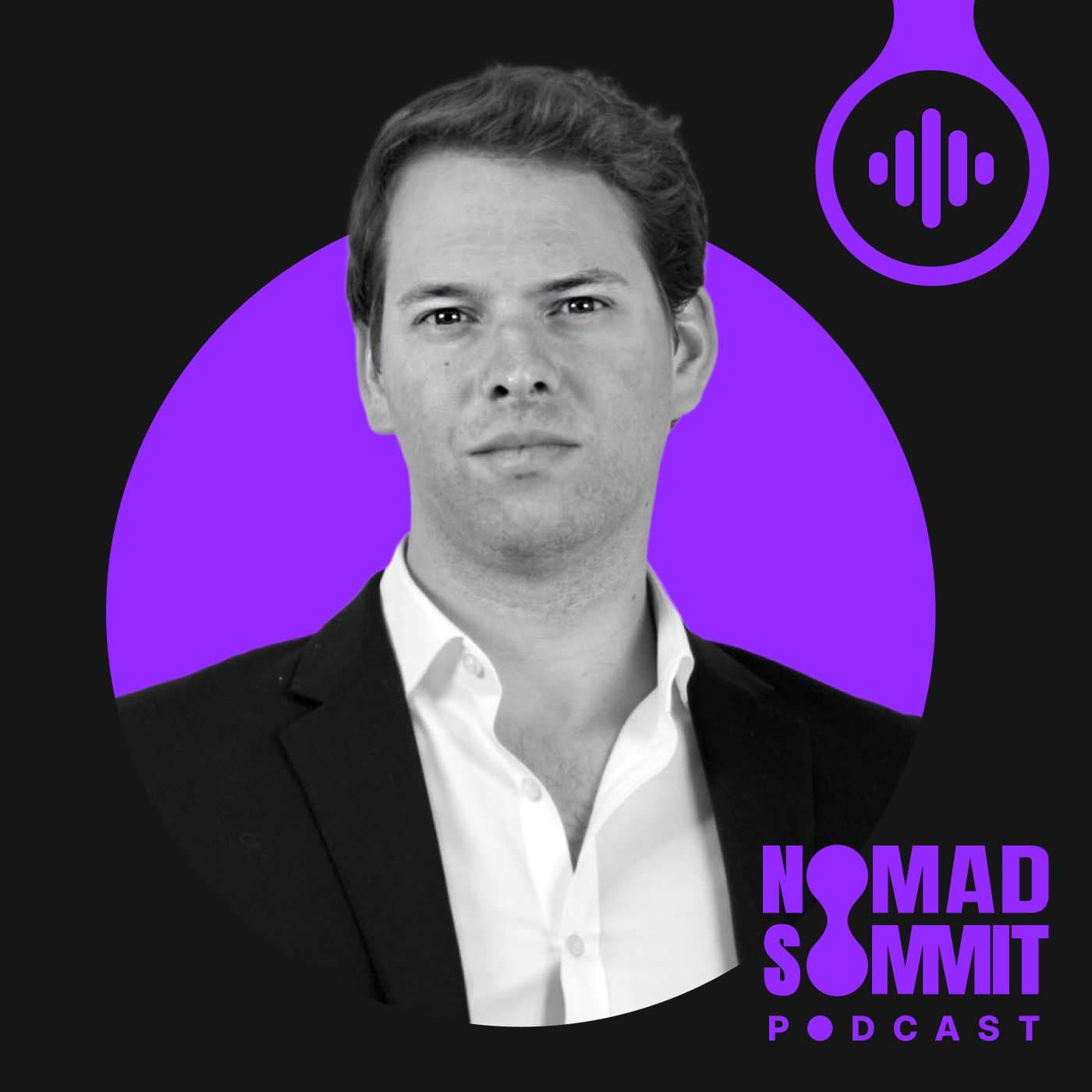
Matt Gray
Founder and CEO of The Pangea Technology Group Inc.
30 | Never Miss a Friend Again: Matt Gray on Building the World's First Social Layer for Global Travellers
Show Notes
The way digital nomads and long-term travellers stay connected is changing rapidly, and few people are shaping that shift as directly as Matt Gray, founder and CEO of The Pangea Technology Group. In this episode of the Nomad Summit Podcast, Matt joins Palle Bo and Christoph Huebner to explore how Pangea aims to solve a problem every traveller knows well: finding out too late that a friend was in the same city.
With more than a decade on the road, over 100 countries visited, and a history of building community across continents, Matt brings both personal experience and strategic insight into how technology can fundamentally change global mobility.
This conversation offers a deep look at the future of travel tech, the realities of scaling a community platform, and why Pangea’s integration of Overlap and Nomadigo could reshape how nomads meet, move, and explore.
The Moment That Sparked Pangea
Like many nomads, Matt repeatedly found himself leaving a city just as friends were arriving. The serendipity of bumping into someone by chance was wonderful, but the missed opportunities were far more common.
That frustration created the seed for Pangea. Instead of hoping to cross paths, what if travellers could see where their network is going to be in the future, not just where they are now? What if we stopped relying on luck to stay connected?
Pangea was built to answer this exact question: a simple but powerful platform that lets travellers share their movement plans and see where their people will be next.
Three Platforms Become One: The Acquisitions of Overlap and Nomadigo
One of the biggest developments in the nomad tech world this year was Pangea’s acquisition of Overlap and Nomadigo, two platforms widely used by communities like Remote Year, WiFi Tribe, and independent nomads.
Before, travellers were scattered across multiple apps. Someone might have friends on Overlap, others on Nomadigo, and others on Pangea. No single place showed the full picture.
Matt describes how users kept asking the same question:
Why can’t I share my travel plans in one place?
By merging these platforms into Pangea, the user base is now united, creating the network effect needed to make the tool genuinely valuable. Together, the combined community sits at around 50,000 users and growing.
Beyond Nomads: Understanding the Real Target Audience
A big part of the discussion revolves around redefining who Pangea is built for. Surprisingly, not every digital nomad is the ideal user.
If you spend nine months in Bali or six months in Bansko, you generally know who is around you. But travellers who move every few weeks benefit enormously from visibility into where friends will be.
Pangea is built for people who:
- travel frequently
- have flexibility in their schedule
- want to make decisions based on where their network is heading next
This includes digital nomads, yes, but also business travellers, seasonal workers, extreme travellers, and even families wanting to track loved ones across the globe. Matt estimates this market to be between 100 and 200 million people.
Future Features and the Road Ahead
Pangea’s onboarding process is intentionally thorough, helping users input enough meaningful data to make the platform valuable from day one. More automation, including optional approximate GPS location sharing, is coming in a privacy conscious way.
Matt also sees huge potential in integrating niche travel tools, apps, and services. Instead of fragmented platforms where users must enter the same travel data multiple times, Pangea wants to create a unified ecosystem. This approach mirrors what Matt saw in his previous fintech career, where consolidation simplified and improved the user experience.
Monetization Without Ads: A Better Travel Economy
Unlike many social platforms, Pangea will not rely on advertising. Instead, revenue will come from helping travellers find curated experiences that they can book directly through the platform. Users pay the same price, vendors avoid ad spend, and Pangea earns a commission.
This keeps the platform focused on utility, not content feeds and distractions. The goal is to add value by connecting travellers to meaningful activities, events, and opportunities that enhance their journeys.
Cape Town Nomad Week: A Glimpse into Community Building
In addition to Pangea, Matt is co hosting Nomad Week in Cape Town alongside Andrea Smith, a long-standing figure in the South African nomad community.
The event includes talks, hikes, beach gatherings, collaborations with partners across Africa, and even a 34 bedroom villa party in the Cape Winelands. It is a community driven experience that mirrors Pangea’s mission: bringing people together in real life through shared movement and shared interests.
Why This Episode Matters for the Nomad Community
This conversation goes far beyond app features. It taps into a global shift in how nomads choose destinations, how they meet people, and how they navigate a lifestyle that depends on movement and connection.
Matt’s vision represents the next chapter of the digital nomad landscape:
More connected.
More intentional.
More community driven.
For anyone living a global lifestyle, Pangea is shaping what comes next.
Key Takeaways
- Pangea was created to solve the problem of missed connections among global travellers
- Overlap and Nomadigo have merged into Pangea, creating a unified community of around 50,000 users
- The ideal user is someone who travels frequently and makes flexible decisions based on where others will be
- No ads are planned in the monetization model, keeping Pangea clutter free and user focused
- Future integrations aim to combine many niche travel tools into one ecosystem
- Cape Town Nomad Week reflects the in-person community building parallel to Pangea’s digital mission
- The market for this kind of platform is much broader than just digital nomads
See transcript
Palle Bo (00:02.571) Welcome back to the Nomad Summit podcast. My name is Palo Bo and I'm again here with Christoph Hübner from Nomad Summit. And today we're diving into, how should I say it? The future of travel tech with none other than Matt Gray, the founder and CEO of the Pangea Technology Group, Incorporated. Hi, Matt. Matt Gray (00:30.12) With pleasure. Palle Bo (00:32.333) So let's just start with a little bit of your backstory. You've been, you're a nomad, you've been on the road 80 % of the time for 12 years and full time for five, and you've been to 111 countries so far. What motivated your travel? What motivated you to travel as much as you do and kind of be a nomad? Matt Gray (01:26.288) you go from being like an 18 year old in the US where you can't drink and you can't, you're not really an adult, to Europe where you're like all of a sudden like you're a real person, you're going out for dinner and drinks and meeting friends and like it just was a total light switch moment for me. Also the realization of I think how much faster community forms when you're traveling because you have so many touch points with people, you have so many different kind of activities and shared experiences. That you just develop really cool connections and friendships. So that was kind of the start of it. And then when I graduated university, I worked for a very traditional sort of in-office company, but they were very international. And that was one of the things that I really liked about them. So they were a company called Ion Group. We were a global fintech. And I joined in a rotational program, did a lot of different roles. I actually really enjoyed my time and to someone who was 100 % location independent rather than, you know, had a lot of flexibility, but I was still required to go to an office somewhere in the world at least once a month normally. Christoph Huebner (04:08.554) So what is Pangea? Palle Bo (04:11.499) Yeah, I'm also wondering, was it something that you thought, this is something I could use for myself? Or how did the idea come to you? Matt Gray (04:52.495) Pangea is in short, a platform for travellers or really anyone who is moving around the world, to keep track of where their people are and where they’re gonna be. When I created it, I’d be sitting at the airport at the end of like a week in London and I'd see a friend posting on Instagram that they were just arriving in London and it's like “if I knew you were gonna be here I could have adjusted my plans” because I had a lot of flexibility of when I traveled and I think we all have these amazing stories of the serenitous time we bump into a friend in like an unfamiliar city and you're like wow it's like so cool for every time that happens like we miss that 99 times and I think that's the problem we're trying to solve for like how much better could our lives be if we knew where our friends were going to be. Palle Bo (05:11.905) Right. Christoph Huebner (05:33.298) So give us an example for how that played out for you, where you met someone somewhere who you would have never met by chance. Matt Gray (05:44.12) Totally. you know, I think that the example that I had most recently, I was in New York for some meetings in May, and I was going to the NomadMania conference in Uzbekistan at the end of May. So, I had like two weeks to play with, and I was just trying to figure out, you know, do I stay in New York longer? Do I go to Uzbekistan earlier? Do I go somewhere else that's kind of along the way? And I was looking on Pangea. One of my favorite features is you can look on a map and filter on a certain date range. So I was able to see where all of my friends were going to be. And I noticed that I had three different groups of friends all going to be in Lisbon at the same week. So, I said, cool, I’m gonna go to Lisbon. And then with me being there I created this awesome little nucleus of a community because we rented a boat one day and like brought everyone onto it from the three different groups, did a couple dinners. I was able to catch up with people I hadn't seen in a year, and all of those people now became friends through me because like friends of friends obviously is a great catalyst for connection. So yeah, it was really cool because I would have never, I would have probably known that one of them was there and maybe considered Lisbon but not known like, wow, three groups of people that I know are all in Lisbon. Christoph Huebner (07:17.738) So that sounds like a case that works probably for you as the founder, as you got all your friends into the platform. And we all know the network effect of platforms, of software. They are only fun if a certain ratio of your friends are using them as well. I remember back in the day, when Facebook came across the pond into Europe. I think in 2007, they did some kind of like an ambassador campaign. was one of them back then, like one of a hundred people that got acquired with some gamification and merge and stuff in order to bring all their friends over from the German legacy copycat where everyone was on. you are growing your app beyond your personal network as well. Now, not only with Pangea, but also with acquisitions. Matt Gray (08:50.447) Yes. So, first of all, the network effect is our big challenge. So, there were two other platforms in the Nomad space that kind of each of us came up in our own way, different origin stories. I have a lot of respect for both teams. We announced the first one, which was an app called Overlap. So similar concept to would let you know when your plans overlapped with others used heavily within certain digital Nomad communities. So largely within Wi-Fi Tribe, Remote Year and some of the early network groups were on that app. And then there’s a third app called Nomadigo, that we just announced last week, that we acquired. And one of the big complaints that all three teams got was “I got friends in all three of these platforms, why can I just share my travel plans in one place with my network and all of these places, can you integrate or something?” And if you're competing, then the answer is “no, we can't really integrate”. That would be working with the competitor. But I think a better version of that is let's bring the platforms together and the user base together and the community together. Palle Bo (10:06.838) So, what's the plan going forward? Will these platforms remain separate or is everything eventually going to come together in Pangea? Matt Gray (10:32.447) Yes, all three platforms and the users’ connections are now on Pangea. So those legacy apps no longer work, they just get a message that we’ve now moved to Pangea. We are not supporting the old apps we’re now working as one commity. Palle Bo (10:50.315) And people are okay with that. Matt Gray (11:12.447) Absolutely. The response has been really positive. As long as you’re not taking things away from user’s the response is positive. And between the three we're at around 50,000 users who have downloaded the app. So I think it's starting to get, you know, real critical mass. And my hope here as well is that the people who have heard of one of these platforms and maybe had friends on two or three of the platforms who never wanted to deal with it might say, okay, cool. Well, if there's gonna be one player now, let me engage with this. Let me come onto it. Let me share my plans. And by the way, it's 100 % free. So I think there are other tools Palle Bo (11:47.382) Wow. Christoph Huebner (12:36.106) Instagram and WhatsApp don't ask you to pay because you're not the customer, you're the product. So what is your business model then? Matt Gray (13:48.319) The opportunity we see is to be an added layer to the experience. Say, there's this group of other people who are other nomads who seem pretty cool going on this kayaking tour on Thursday. You can book that through us. We would get a commission on that. You would pay the same price as if you went to the vendor directly. The vendor doesn't have to spend money on ads and sort of everyone wins. One thing I'm very committed to avoiding is ever showing like direct advertisements in Pangea because I think one of the reasons social media failed as a sort of category of software. Palle Bo (14:39.169) So when you say that you're not monetizing it yet, are you just naturally wealthy? And as far as I understand, Pangea is your full-time work. So how do you make that happen, Matt? Matt Gray (15:57.375) We kinda took a long-term approach. I'd rather get the product correct and get the product right first and deliver the value for the users rather than figure out a way to sort of quickly put up a paywall or quickly ask, everyone paid me $5 to use the app. So I think long-term, that's detrimental. And I spent last 10 years at my last company. And I think I'm generally a fairly long-term person. This is the next chapter of my career is focusing on travel tech and focusing on, I think, community within the travel segment and social travel. My needs as a consumer are different each time. And I think we want the platform to cater to more than one set of consumer and more than one set of user. But we can't just abandon the niches that are sticky to our community. So we want to build out sort really rich content, one niche at a time. And the obvious starting point is digital nomads, because we have sort of critical mass of the nomad community now in the apps. And I'm, you know, live and breathe that segment, probably 80 % of my time as a digital nomad. Christoph Huebner (18:18.675) That's very interesting. And it’s quite exciting if you convinced people to buy into your idea by trusting your head, but I guess you also had to convince them with some numbers. A question that we're regularly discussing here on this podcast is the size of the market, like how many digital nomads are actually out there. We had scientists here that do scientific research into this topic. In our last week's episode with Ryo of Colive Fukuoka, we discussed this topic as well. I mean, there's often, it often starts from a definition point of view, like what is a digital nomad? But you mentioned now that your target market is much broader and wider than just digital nomads, people who like full-time travel while working remotely, working digitally. Your market is also like vacation travelers or you mentioned NomadMania earlier, like extreme travelers. How do you define your target audience, your target market? Matt Gray (20:42.783) Yeah, so I think the “what is a digital nomad question is always really interesting to me because I've heard definitions that exclude me from it. And I'm like, well, OK, I disagree. And I've heard definitions that I really don't think are accurate. So the way I think of our market is actually not even all digital nomads fit within our market. think most do. But what really is the finding thing for us is are you someone who's moving around the world like pretty frequently throughout the year? So if you're spending you know nine months in Bali and then three months in Bansko and like then you go home for Christmas you're actually you know you probably know who's in your city and if people know that you're in in Bali for nine months then they'll ping you that they're there. I think that's you're actually less of a target demographic for us. You're more than welcome on the app and I think it's still a useful tool to keep track of where your network is going. Where we found people who are moving around frequently. So let's say, you know, six times a year up to like once a week are the ones who are really getting value. And when people have flexibility over their schedule and where they go next. where you have some ability to say, okay, cool. I'm in Cape Town right now. I don't know when I'm going to leave. cool. I've got friends going to Namibia in February. Maybe I'll go meet them for, you know, three weeks while they're there. And I think it so the more sort of traveler archetype, let's say, the people who really enjoy exploring new places and exploring new places with people, those are the ones that I think are the best sort of niche for us. I think that segment though is a couple hundred million people because if you think of the people who are either doing that routinely or the people who are connected to those people who have invested, like my parents love the app because they know exactly where I am, they know where I'm gonna be, so they don't travel around a lot but they actually use the app quite a bit. And when they do travel, like you can monetize vacation travelers, I think even at a higher rate than digital nomads sometimes because they have a higher budget for the one week or two weeks that they're traveling than a nomad might on a given week when they're traveling because we're obviously trying to stretch it through the whole year. So yeah, I put the market size in the sort of 100 million to 200 million as our sort of core. I could see it going higher because you can engage with tour operators, people who are in the tourism sector in these different locations. But in terms of like sort of power users, I would say 100 to 200 million. But again, that could be someone who's a ski instructor who does different ski seasons and moves around different ski mountains. Or it could be a business traveler who's traveling a lot for work and just also loves to take trips like to somewhere. think travelers are pretty multifaceted. So it's really about how frequently are you traveling and whether or not you're Palle Bo (23:53.046) So I just downloaded the app. haven't created a profile yet. How much work does it take for me starting up and on a regular basis? Do I need to remember to put in where I'm going or does it find out automatically when I'm there? How does it work? Matt Gray (24:15.561) Yeah, so we've tried to tee to that line very nicely. Our onboarding, there's quite a few steps and a little wizard to help you get up to speed. We got a lot of feedback from users that there's too many steps in onboarding, but then the statistics actually show that all the users complete the onboarding. We have like a 90 % plus like pass-through rate of the onboarding, and then those users actually end up using the app more because they've added all the important data they need to be successful on the app. So it is a bit of a time investment but not huge, it takes around three minutes. And then on an ongoing basis we’ve been really privacy focused, but we will add the ability to sort of live share your approximate location based on like where your GPS says you are, but we wanted to focus first on making it very user focused on what users are sharing rather than like over sharing information there. Palle Bo (26:03.103) Right. I've also seen you mention that there are much more that could potentially be integrated. I think you said 250 niche travel products out there that could be integrated. So where do you see it going in the coming years? Matt Gray (26:20.971) It's great question. I talked a little bit about my background at Ion. We were a fintech conglomerate and one of the really interesting things growing up in that company, I saw our founder take his, it was 800 people when I joined, it was about 13,000 people when I left. And we bought 25 companies in the fintech space. And each company we'd buy would get us into a new sort of sector, a new industry. It would get new customers who were using one of these different products and long term, was quite beneficial for the industry because then all these things, we had to have all these different apps and products doing the same thing. We, as a bigger group, were able to bring that together and deliver sort of single platforms, single products to our customers. So the vision's very similar for Pangea. I think there's lots of really interesting and cool travel apps that people create. think Nomads especially are entrepreneurial and a lot of them are in tech, so they build a product or they build an app. And then the real challenge is how do you get critical mass of people using one of these groups, but then it's counterproductive because if I need to add my travel plans to a scuba diving app and and Pangea for Nomads and like all these other places, I'm probably not gonna do it and I'm probably not gonna get the benefit as a user from doing it. So that's kind of where I see it going is we'll continue to grow organically. We wanna continue to build out Pangea. The downside of course of doing these acquisitions is we focus heavily on the acquisition rather than building new and awesome features Palle Bo (28:02.573) So, and Matt, you and I, have one thing in common, our deep, deep love for Cape Town. And you're there right now and you are actually actually also the co-host of the Cape Town Nomad Week happening in a month at the same time as we're having a blast here in Chiang Mai. Tell us about that. Matt Gray (29:30.441) Yeah, absolutely. Well, I think, you know, one of the visions for Pangaea is one to tell you where you should be at a given time, but also to help people figure out how to avoid conflicts and scheduling. So I'm optimistic that, you know, in coming years we can optimize or if people want to go to events in Chiang Mai and then come to South Africa after, we can do that. But Nomad Week in Cape Town, I teamed up with Andrea Smith, who has kind of been the original digital nomad community creator in Cape Town since 2018. So, we're running Nomad Week in Cape Town at the last week of January this year. And really just using it as a platform to connect the community of digital nomads and also of travelers. I think the digital nomad scene in Cape Town is interesting because it gravitates, you get a lot of people who are in that category Christoph Huebner (31:17.866) No worries, around this time of the year we're not competing anymore. I people have made their choice on which continent they want to spend their winter season. So, I'm pretty sure there's not many people who are now in between, do I go to South Africa or to Thailand? Palle Bo (31:33.997) No, and then you just have to make a conscious decision to move it to February next year, so we can do both. Christoph Huebner (31:41.73) Exactly. For next year, we think a little bit better for people to allow to go to both of them. But tell us why people should come to the Nomad Week in Cape Town. What's the program looking like? What do you offer during that week? Matt Gray (31:59.145) Yeah, so we've got, we've got three days of talks. And then the majority of the week is focused on social connection, sharing experiences around Cape Town and nature, beaches, hikes, things like that. But doing it as a group, doing it as a community, and just bringing the same group of people together for the week. A lot of people typically will stay for three months. So, we did it in January this year as a way to kind of be at the beginning of that season. We also want to showcase some of the up-and-coming nomad scenes in Africa. We’ve got some partners in Kenya, some partners in Ghana that are going to be involved and just help unite some of them. And then two, just help people realize how many cool other places there are. And then on the social side, we've got, I think the event I'm most excited about, we've got a 34-bedroom wine-lands villa that we've rented. So, we'll be having a big pool party, traditional South African braai out in the winelands, some of the best wineries in the world. So that will be, from a pure social perspective, I think a lot of fun. Christoph Huebner (34:30.494) So, for everyone listening to this podcast who's around Africa this time of the year, join the Nomad Week in Cape Town. For everyone who is in Asia, join the Nomad Week following the Nomad Summit in Chiang Mai, happening at the same time last week of January. And for everyone who is interested in those extreme travelers, the UN Grandmasters, they have a platform, it's called NomadMania. Matt mentioned that earlier. And if you want to learn more about that, we had Orest Zup, one of the partners of NomadMania here on the podcast episode number 13, Listen In. We will link that podcast episode in the show notes below. And for now, thank you very much, Matt, for joining us this week's episode. That was very insightful and inspiring. Palle Bo (35:25.613) Super cool. Thank you, Matt. Christoph Huebner (35:28.936) If you like this podcast, subscribe, forward it to your friends, leave a comment and then hear you next week.
Keep Listening
EP. 76 · Oct 2026 · 29 min
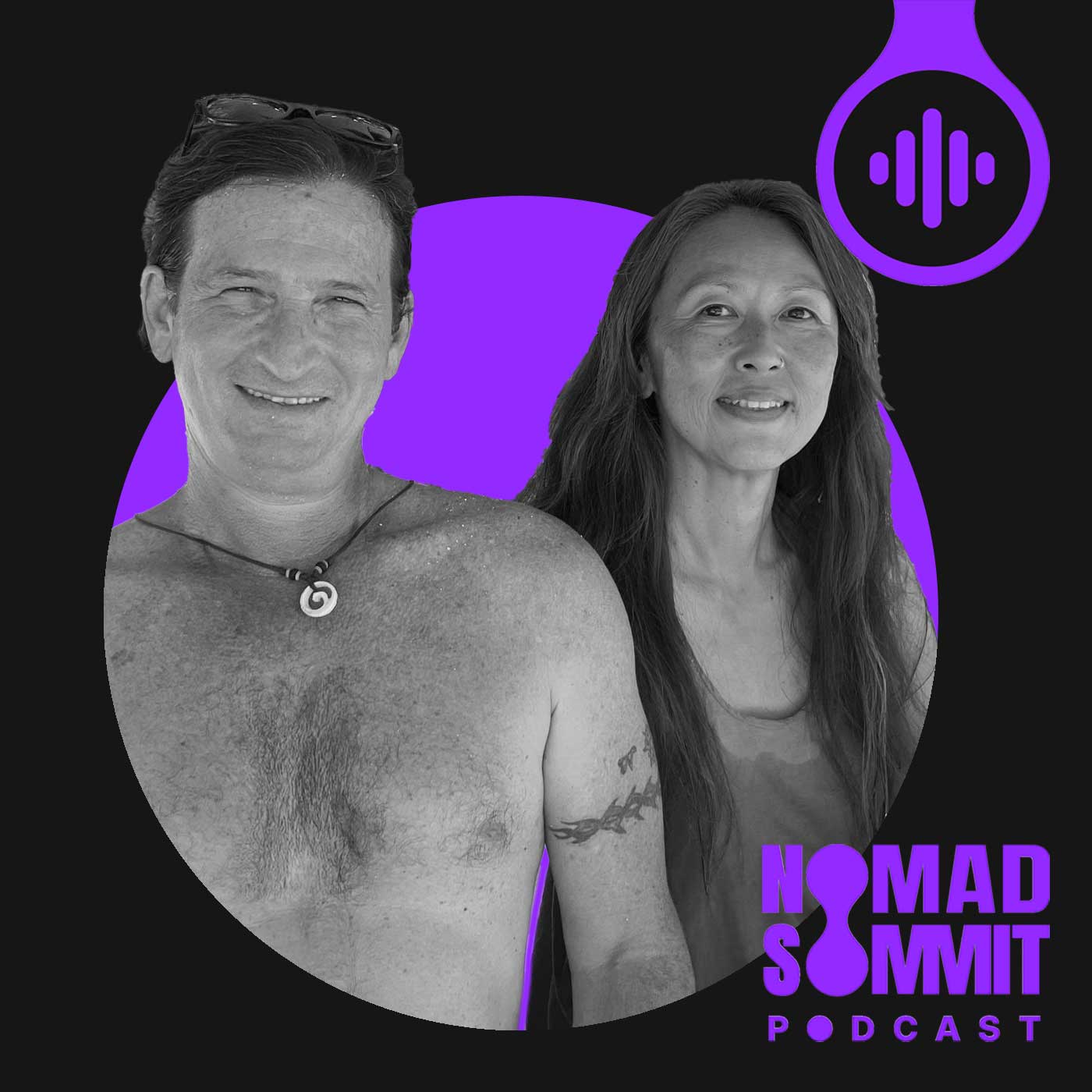
76 | Is Asia Becoming the Future of Digital Nomadism?
with Miho & Daniel Beck
Asia's digital nomad scene is evolving fast – and it's no longer just about Chiang Mai and Bali. From the Philippines to Japan, China, and beyond, new…

Oct 2026 · 29 min
75 | 70% of Her Team Is AI – Meet the Egyptian Entrepreneur Building an AI Empire
with Rania Esmael
What if you could run a business where 70% of your team consists of AI agents? And what if one of those agents even applied to be a guest on this podcast…
EP. 74 · Oct 2026 · 23 min
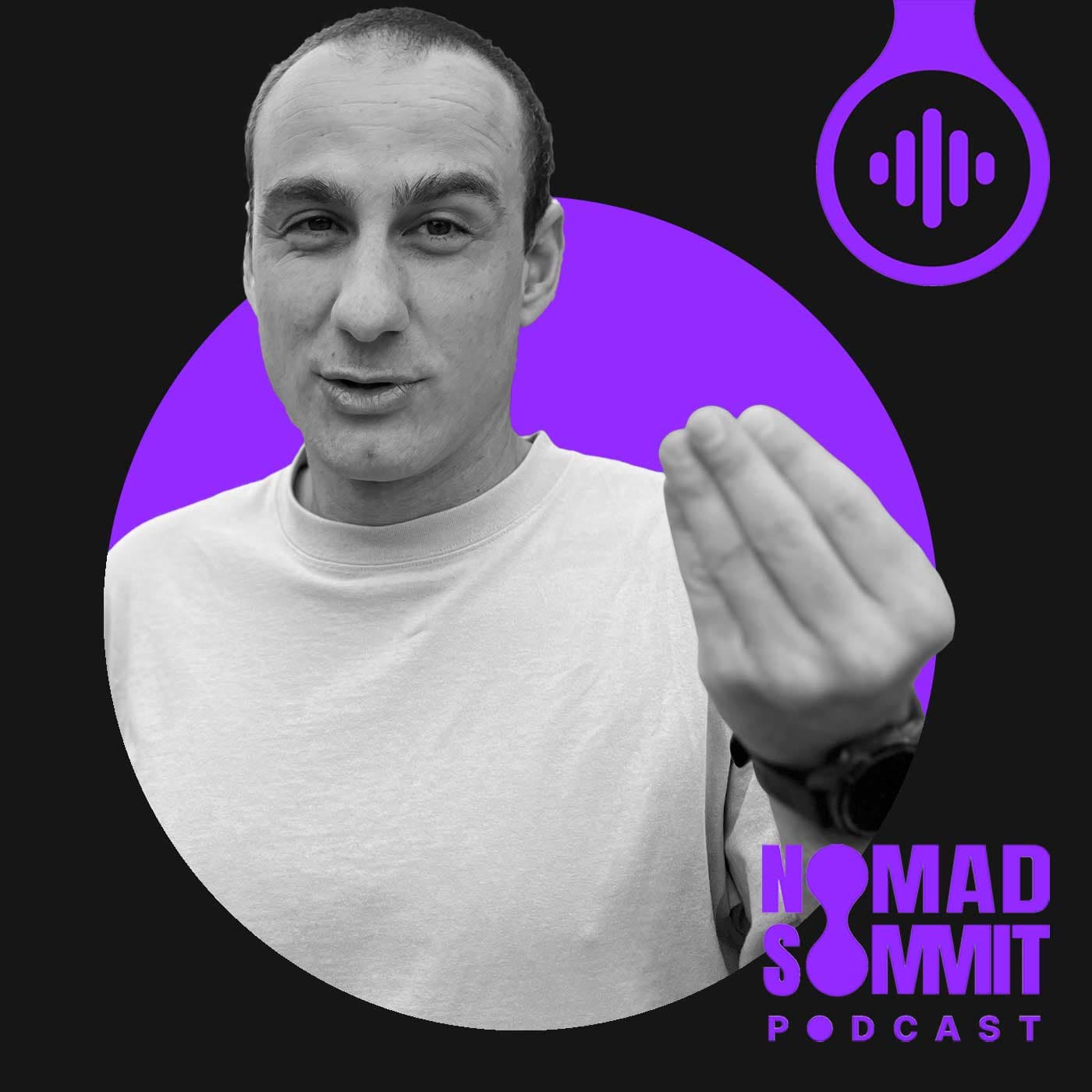
74 | Italia Nomad Fest: Building a Digital Nomad Community in Palermo
with Marco Traina
What makes a place feel like home when you're a digital nomad? Is it the weather, the food, the people, or something deeper? In this episode of the Nomad Summit…
EP. 73 · Oct 2026 · 26 min
73 | Is SEO Dead? What Actually Works in the Age of AI
with Kyle Roof
Is SEO really dying, or is it simply changing again? In this episode, Palle Bo and Christoph Huebner sit down with SEO expert and entrepreneur Kyle Roof, who…
EP. 72 · Sep 2026 · 34 min
72 | Inside Nomad Summit: What's Coming to Chiang Mai 2027
with Christoph & Alexandra
What's changing in the digital nomad world – and what does that mean for Nomad Summit 2027? In this special episode, Palle turns the tables on his usual…

EP. 71 · Sep 2026 · 24 min
71 | From Homeless at 17 to Digital Nomad?
with Oliver Kuiz
Oliver Kuiz isn't joining us with a perfectly mapped-out digital nomad success story. He's right in the middle of trying to create one. After becoming homeless…

Never Miss an Episode
Get new episodes, event announcements, and nomad insights delivered straight to your inbox.