EP. 33 · DEC 31, 2025 · Education · NGO · Thailand
33 | Education Is the Foundation of Freedom – Why Nomad Summit Supports FERC
In this episode of the Nomad Summit Podcast, Palle Bo and Christoph Huebner sit down with Marc Dumur, President of the Foundation for Education and Rural Community (FERC). The conversation focuses on why education matters so deeply – not just as a tool for employment, but as the foundation for freedom, choice, and long-term empowerment.
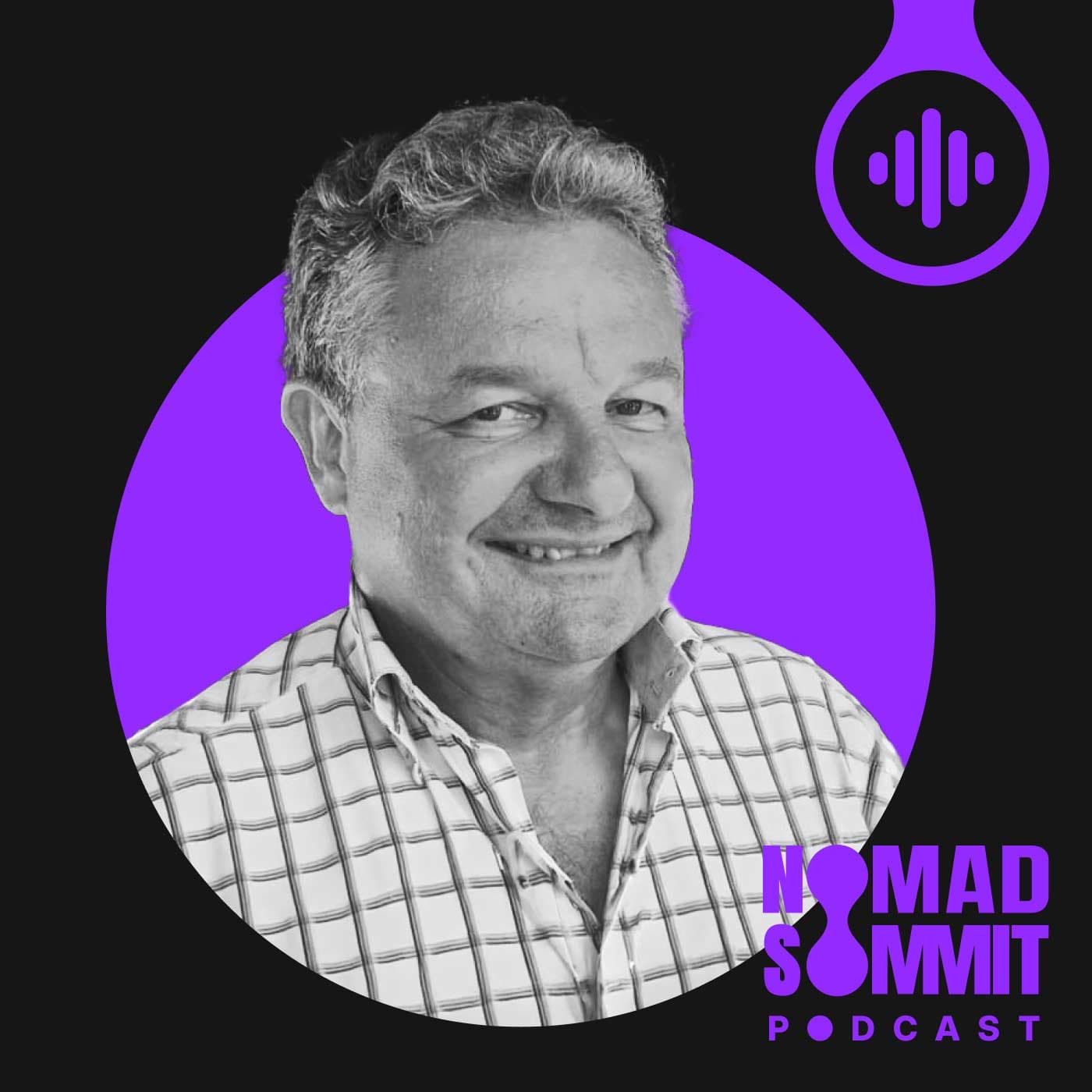
Marc Dumur
President of the Foundation for Education and Rural Community (FERC).
33 | Education Is the Foundation of Freedom – Why Nomad Summit Supports FERC
Show Notes
Education is often discussed as a pathway to better jobs or higher income. But at its core, education is something much more fundamental. It is the foundation of freedom. Freedom to choose. Freedom to understand options. Freedom to decide one’s own path in life.
In Episode 33 of the Nomad Summit Podcast, Palle Bo and Christoph Huebner sit down with Marc Dumur, President of the Foundation for the Education of Rural Children (FERC), to explore why education sits at the heart of empowerment and why Nomad Summit actively supports FERC through Nomad Week side-event ticket proceeds. This means: All side events to the Nomad Summit are free to attend for ticket holders. But everyone else can sign up and participate as well for empty spots – in return for an admission fee which is 100% donated to FERC. Interested in hosting a side event? Suggest yours here!
This conversation is not about charity in the traditional sense. It is about responsibility, long-term thinking, and the belief that access to knowledge changes lives in lasting ways.
Why Education and Nomad Summit Are Closely Connected
Nomad Summit has never been about convincing people to become digital nomads. Instead, its mission has always been to provide knowledge, perspectives, and real-world insights so people can make informed choices about how they want to live and work.
Some listeners may choose a location-independent life. Others may decide it is not for them. Both outcomes are equally valid. What matters is that the choice is informed.
Education enables that kind of decision-making. Without access to learning, information, and critical thinking, freedom becomes limited. The episode makes it clear that education is not only relevant to global mobility or remote work – it is relevant to every aspect of human agency.
What FERC Does and Why It Matters
The Foundation for the Education of Rural Children focuses on expanding access to education and opportunities in rural communities. Rather than offering short-term solutions, the organization works on building long-term capacity, helping individuals and communities gain tools that continue to create value over time.
Marc Dumur explains how education creates ripple effects that go far beyond the classroom. When people gain knowledge, they gain confidence. When they gain confidence, they gain agency. And when agency spreads through a community, the impact multiplies across generations.
This long-term perspective is one of the main reasons Nomad Summit chose to support FERC. The partnership aligns with the idea that meaningful change does not come from quick fixes, but from sustained investment in people.
Small Actions, Long-Term Impact
A recurring theme in the conversation is how small, intentional actions can lead to significant long-term impact. Supporting education does not always require massive gestures. Sometimes it is about consistent contributions, awareness, and choosing to support initiatives that focus on lasting outcomes rather than short-term visibility.
By directing Nomad Week side-event ticket proceeds toward FERC, Nomad Summit integrates impact into its ecosystem in a practical way. Attendees participate in events, build connections, and at the same time contribute to educational initiatives that extend far beyond the nomad community itself.
Freedom Begins With Knowledge
The episode reinforces a simple but powerful idea: freedom begins with knowledge. Whether someone is considering a nomadic lifestyle, building a business, or navigating life in a rural community, access to education shapes what is possible.
Education does not dictate which choices people should make. It gives them the ability to choose at all.
That principle sits at the core of both Nomad Summit and FERC. One operates in a global, mobile context. The other focuses on local, rural communities. Yet both are connected by the same belief – that informed choice is the foundation of freedom.
A Broader Definition of Community
This conversation also expands the idea of what community means. Community is not limited to those who attend conferences or live a location-independent life. It includes people whose circumstances, geography, and opportunities look very different, but whose potential is just as real.
By supporting education initiatives like FERC, Nomad Summit acknowledges that global freedom and local empowerment are not separate ideas. They are deeply connected.
Conclusion
Episode 33 of the Nomad Summit Podcast is a reminder that education is not an abstract concept or a distant ideal. It is a practical, powerful force that shapes lives, choices, and futures.
Supporting education is not about telling people how to live. It is about giving them the tools to decide for themselves.
That is why education is the foundation of freedom – and why Nomad Summit supports FERC.
See transcript
[00:00:00] Palle Bo: Welcome to the Nomad Summit Podcast, where we explore what it really means to live and work without borders. My name is Palbo, and today Christoph hna and I are joined by Marc Demure, the president of Foundation for Education and Rural Community. That's a bit of a mouthful, so it's also called FERC for short. In this episode, we're gonna be talking about education empowerment, and why the Nomad Summit supports Ferg through Nomad Week side event ticket proceeds. We're gonna be talking about how education changes lives, why choices matter, and how small actions can create long-term impact. Welcome to the Nomad Summit Podcast, episodes 33. Christoph, I know that you always say that Nomad Summit isn't about convincing anybody to become digital nomads. it's more about giving people the knowledge and that's where education comes into play. Am I right? [00:01:02] Christoph Huebner: Exactly. It's about knowledge in the choice. So we, we know that dislocation independent lifestyle is not for everyone. But we want to empower people to get themselves into a position in life where they have the choice, where they can decide if they want to go this, this route or not. And the basic foundation for that is education. If you are. Growing up, if you're born and or, or growing up in underprivileged communities, then the biggest lever to get you to that position is language and education, and that is why it is so important and meaningful for us to go and give back beyond what we create with the Nomad Summit. And help to, to foster this education, especially there where it's needed most. And that's where we, about a year ago, found the foundation for education in rural communities here in Northern Thailand. And, we already, um. A donation happen based on what the community, gave us earlier this year and decided to expand on that. And today we are joined by Ferc’s president. Marc, welcome to this podcast. [00:02:18] Palle Bo: And Marc, you just got an ice cream. We are in this wonderful, wonderful, place and, Christoph and I, we just had the ice cream before and it's amazing. So feel free to enjoy it as we, as we talk. [00:02:34] Marc Dumur: Thank you. Thank you. [00:02:36] Palle Bo: Just don't speak with food in your mouth. Marc Dumur: No, I won't. Hahaha Palle Bo: Alright. You are Swiss and you are also the honorary consul of Switzerland here in Thailand. [00:02:46] Marc Dumur: Yes. Well, basically I've, I came in 1988 and I, I was a hotelier. I worked in hotels for 30 years, for different companies. One was Amari Hotels and Resorts in Bangkok and, Chang Mai and later on Shanghai and later on I built my own little business and I worked on top in a very beautiful resort in Chiang Rai. So. Eventually opened a, old Age and Care home here in Chiang Mai in Do, it's called Wei, which was built, 10 years ago, to take care of people basically from abroad, not only from Asia, but also from Europe to, to take care of elderly people who, where they might not be able to pay that care back in Europe. [00:03:42] Palle Bo: How did you get involved with FERC and what is it more specifically that FERC does? [00:03:46] Marc Dumur: Being a hotelier, I was, asked to cater some of the events at the beginning 25 years ago. 20, yeah. 25 years ago when we first, uh. Gathered together a bunch of, expats living here, mainly Americans, and I was totally here who had to do the catering. So we did a, a gala, a a gala, gala party, and did a fundraiser first for, we had some of these expats were volunteering in a. In an orphanage in, in, on the way to Meri, and, they noticed that they needed a vehicle for their foster parents program. That means the, the, the, those orphans were actually placed for, to be, what do you call it, to be sent to the states and adopted in the states and other countries in the world. But before that. The idea was to let them live once in a family. 'cause they always lived in a ho In a orphan? Yeah. In a home. Yeah. So, and administrative, typically the, the orphanage still had the, supervision. So they had to visit them, but they didn't have a car. So they needed, they used, the red truck and it wasn't very convenient. So we actually raised funds in one night, 500,000 baht and paid for a, for a pickup truck. Which I still have to date, so. And from there we carried on and, made the next year for a, a little preschool in the region of Met Jam, and then for a dormitory the year after. And then we actually, registered the, as a foundation, as the foundation for the education of rural children. Since 2009, we actually started to do scholarships. We found out that making projects like schools, dormitories and things we did also nearby here in one, in, in, Doi Saket and in on the Chiang Rai side and so on. But it's difficult because you, you basically have to physically go there and make sure that every bag of cement really goes there and not somewhere else in the village. And so, so it's complicated as the, committee, to actually get it done. So, yeah. we have to, so we, we were looking for an another way of. helping. So, since we have, one lady in our, in our board who came from the, high school education department, she then proposed, why don't we do just the 10th, 11th, and 12th grade. Everybody goes until nine year to, to education. It's paid by the government. It is actually paid by the government until 12 years. But very often the children will have, the youngsters will have then to go further away because in their village is not a school as such who educates them all the way to, end of high school. So they will have to go some 20, 50 cliques away. And if it's. In the mountain that mean maybe they come home only once a week or maybe sometimes even only once a month. That means there's more, more expenses. There is, transport, there's more clothes. There is, you need some kind of a bedding. You need something. So there's all more things when you do not live at home. So this, scholarship suite and provide, actually pay for. [00:07:36] Palle Bo: That must be so meaningful.: [00:07:37] Marc Dumur: It is, and it's very thankful. It's very, and just seeing [00:07:39] Palle Bo: the smiling faces on the kids. [00:07:41] Marc Dumur: Yeah. We, we actually, started very humble. We had like 15 kids at the beginning. that was I think in oh nine and we're now in 2025. We have 92 children, which we support. And some 10, 15 years ago we started to, to do, um. that a specific person could sponsor. A specific student. [00:08:10] Palle Bo: Yeah. It's a little bit like a, a sponsoring a child somewhere and you, you could somewhere send letters. Marc Dumur: Yes. Yes. Yeah. [00:08:19] Christoph Huebner: So where are the donors, usually coming from? Are those expats inside Thailand or, or…? [00:08:25] Marc Dumur: We used to, I mean, you could imagine when we used to do the galas, that was basically people from here, right? Yeah. It was just friends. You just went and sold the tickets to anybody. We had, the former, I'm actually the chairman. It doesn't say there, I'm the chairman as much as the president of the committee. So nevermind that, chairman had actually, um. A very beautiful Lao in, in Hong here, south of Chiang Mai. And we used to use his premises to do these beautiful events. and so, and at night as a hotelier was doing the catering. So, but, yeah, so, uh. That's how it started. But then once the internet became much more affluent, you can, of course you access your, your, your access to the world is there, right? It's just a matter how you can Marcet the website and make sure, people know about you, right? [00:09:24] Palle Bo: Yeah. Christopher, I think we should talk a little bit about how, nomad Summit, is supporting FERC's work. [00:09:30] Christoph Huebner: Yes, absolutely. It all started, this year in January, and this episode comes out on the very last day of 2025. So you might hear it already in early 2026. So I'm referring to the Revival Nomad Summit in January, 2025, where we, for the first time had, besides this conference in the. Five star hotel, 56 site events all over Chang Mai that were open for ticket holders for free, but also at an admission fee for non attendees of the Nomad Summit. [00:10:08] Palle Bo: I guess if, if you already have a ticket and you're attending, then the summit. Self, then you can go to all the side events for free. [00:10:15] Christoph Huebner: Exactly, yes. If you, and yeah, if you as a listener right now are considering to buy a ticket for the next Nomad Summit in January, 2026, all the side events that we will be hosting, are free to attend with your ticket, but also as we want to integrate with local communities, people who do not, do not have a NOAD Summit ticket can attend as well. And, in January, 2025, we had a, a symbolic fee, that we in the first place were intending to share with a host of these side events, but then in the middle of the process came up with the idea to offer them to, instead of getting a rather small payout, pull it in a donation. That we would ask the organizers of the Nomad Summit then match and double. And so in the end we donated 25,000, but to ferc. And now as we're sitting here together, Marc, also to put that into perspective, I would really like to understand what kind of an impact do 25,000 but create for afor a child that you're supporting [00:11:23] Palle Bo: And just in for context, 25,000 bath in Euros, [00:11:28] Christoph Huebner: That's about 800 euros or 900 US dollars. Yeah. So how far does that go? [00:11:31] Marc Dumur: A child? [00:11:32] Christoph Huebner: Alright, [00:11:33] Marc Dumur: well, if you, what I'm trying to tell you is what, what, what a child gets every year. Yes. We, we give them 12,000 baht a year and we guarantee three years. So that 36,000 baht, so 25,000 pays two years. Two, two years of that. Right. so basically in, in, in that context that goes into the kitty, it goes into the box and is paid, is paid, then put together and give a child. And the other option would be that people actually sponsor a specific child or three years. Which is then 36,000 baht, which is about a thousand euro, divided by 36. gives you about, 30, 30 euro month, right? Something like that. So, we're basically looking at paying a thousand baht to every child throughout the year, in order to cover. [00:12:33] Christoph Huebner: And the, the underlying problem that you're solving with that is, as you mentioned school here in Thailand is, is paid for by the, by the state and mandatory until ninth grade. But, children from rural communities, then. Often tend to not attend high school. They finish school there and then get their job, and don't participate in higher education from there. And that's where FERC, delivers that, that empowerment and gives people the opportunity to actually finish their high school. [00:13:07] Marc Dumur: The idea is, of course, that they, continue. to convince the parents that it's better for such a child. Very, very often they're very gifted, alright? They have good grades and that such a child has much more chances to actually go on after the, high school, end of the high school and go on to the university. And could after that much more contributes to their community, wherever they live in the future. [00:13:37] Palle Bo: And can it be a challenge to convince the parents in rural areas that education is that important? Or are they just as aware of it as the parent living here in Chiang Mai? [00:13:46] Marc Dumur: We, honestly, the way it works, we go through the, the, official channels that we go through, the education department of the high schools. so they, the ones who covered all three years. We have, [00:14:03] 34, 34 schools in, in province of Chiang Mai. We do only province of Chiang Mai. And, we, um. And this, the, the, it's the, the task of the, of the teachers to find chi children who are students who are, less privileged, who have, where the income of the family is very low and where the child, stands a chance to actually make it. Christoph Huebner: So it's those teachers that basically pre-qualify? Marc Dumur: Exactly. And then we meet, we meet them, we interview them. And, yeah, and we, we often, once in a while we have to reject somebody, but it's not happen often. Yeah. [00:14:46] Christoph Huebner: And how many children do you currently have in your scholarship program? Marc Dumur: 92. Christoph Huebner: 92 children. But that's across like the three years in total? [00:14:51] Marc Dumur: Yeah. So you have, let's say 30 leave every year, something in, in that area. So we replaced them every year. [00:14:58] Palle Bo: Do you have an example of where Oh, in that specific case, we definitely changed the life. [00:15:05] Marc Dumur: Basically you have children who have gone through. Through FERC and then actually went to Chang Mai University or went to rpa, university and became the first one to be on a university in the whole region, in the whole area, you know, for, for the whole village or whatever. So, and they eventually go back and, and, and of course can and some become teachers. we had, several. who became teachers, English teachers, and, and in all sorts of, mainly on the RPO side, which is a bit, the, the teacher, which used to be the teacher's college. And so, yes. And, and this, they, of course, they, they, they, they float afterwards. It's fine. It's excellent, you know, so it, we, we had what we actually do when we do our, annual gathering. We used to do twice a year because we give twice a year the money out. But through to COVID, we decided to, we had to decide we cannot meet them anymore, so we had to send them by bank transfer. So it's all now by bank transfer, which is also a bit safer. But then we always have an event and and we actually bring some alumni, the people who used to be with us, five, 10 years ago, and bring in they, they, and they then have a motivation speech and say, this is what I did and that's how I got it. [00:16:35] Christoph Huebner: That's beautiful. If you have that history and that track record and you can really show how that impacted, people's lives. Yeah. We want to continue with. Having a positive impact on, on those kids' lives with the next Nomad Summit, we will probably have even more than those 56 side events that we had in the 2025 edition, and we will again, make them open for non attendees, this time. The donation will be mandatory. So as we have this idea and have established this partnership already beforehand, we incorporate that into the concept and every site event can be attended for a fee of probably 300 baht per per event. And those will be 100% donated to to FERC. And if we will make ends meet, on our side, with the event itself, we will for sure also add another, bunch, from our own funds to make an even more meaningful donation. But if I hear now from you that 36 k, is the ballpark for. A kid to go through the entire scholarship. I promise we will definitely have at least one kid being, being paid for with the scholarship program. [00:17:58] Palle Bo: Marc eat your ice cream before it melts. [00:18:01] Marc Dumur: it's all right. No problem. [00:18:03] Palle Bo: I, I actually, I, I, I just wanna, you Chris to talk a little bit about what a side event is, because you and I, we, we know exactly what it is, but it can be. Anything And, and, and people listening, if they are here or coming here to Chiang Mai and they want to do something about their specific topic, they can just do it. [00:18:25] Christoph Huebner: Yes, exactly. So the, the Nomad Week is basically an open platform for all our attendees, everyone who, who got themselves a ticket for the Nomad Summit can. During that week, host whatever type of event they want. So imagine this as maybe from other conferences, you know, the unconference part, where you pitch a topic that you want to talk about, where you want to gather people around. with Nomad Week, we take that to, to the next level as we work with basically all of the coworking spaces in Ang Mai, many cafes, restaurants, and other venues. Mm-hmm. So if you want to host a workshop about make an ice cream. We will, we'll definitely also have some, some food and beverage surrounded, things just yesterday even. So, I mean, if you are an attendee, just to give you an example, what we had in, in January, 2025, one of very popular, workshop was about, um. Personal branding on LinkedIn. but also we had goal setting workshops about how to not only set, but also reach your goals in the new calendar year. Alexandra has hosted a workshop about design for non-designers. we had painting classes, we had singing classes, but we also had, um. Outdoors activities like, the monks trail hike. We had meetups for content creators. We had a travel blogger breakfast, we had an SEO burger dinner. So whatever the topic is that you want to meet people, over and, and have a conversation, or you want to learn or want to share something, that's what Nomad Week is for. And in addition, we will have some special site events, like for example, um. With the craft beer brewery, we'll have a little beer, tasting event as well as most probably a, latte art and coffee tasting event. we were talking with a local, artist about making your own chopsticks out of, out of wood. also to counter another problem, in this region of the world that's, single use plastic waste. So these are the topics that, that we will have in Nomad Week. [00:20:39] Palle Bo: Yeah. So say if, if I want to do, a side event about podcasting, I just, reach out to the nomad, summit team through the website and you help find a location. [00:20:51] Christoph Huebner: By the moment this podcast is out, the. Application form for the side events is online. and I've already noted Palle, that we'll have a side event about audio production and podcast production, where we might then also do a live recording of a Nomad Summit podcast episode on stage. So these are the little things that we offer as an additional value for all ticket holders, but again, Chang Mai as the world capital of remote work and digital nomadism has a huge. Local community of people that would want to attend, select, site events themselves, and they can in exchange for a donation that we will then forward to FERC. Palle Bo: Was it hard to learn Thai? Marc Dumur: Oh, after all these years, I've built the hotels and ran around on construction side and no choice. Yeah. I just wanted to say something of our own little thing. after this event, on the 19th of February, there will be a concert in Chiang Mai. Which will, which will be benefit FERC, it's a big band from Amsterdam. The big old big band from Amsterdam is coming with, about 25 people on stage. And they travel here. So you if, as you all can imagine, big bands nowadays, they cannot earn any money anymore, so they all pay their own flight. Wow. They all play, play for free and they get, they tour around Thailand for two to three weeks and do also workshops with, children to teach them how to play in the morning and in the evening, they have a public concert and the children can play with him. It's usually the tunes of the late king. who, who the late king actually had, created a lot of jazz music and, very well known in Thailand. [00:23:03] Palle Bo: So yeah, he was into jazz. [00:23:03] Marc Dumur: Yeah. Yeah. Very nice. And, actually also in, in English. So it's, very, very cute. And, so this Big Band comes to Chiang Mai. And they will play here in a Chinese restaurant on the 19th evening. And the, the benefits go to FERC as well. [00:23:26] Christoph Huebner: So when people want to learn more about ferc, we definitely link the website, ferc thailand.org in the, in the show notes. I just heard that you might also be showing up at the Nomad Summit. Of course, we'll be there. People, can, meet you in person and learn more about your activities. Mm-hmm. [00:23:45] Palle Bo: And obviously on, on your website, you can also go and make a donation. [00:23:49] Christoph Huebner: Yes. That, there is a button to that. Yeah. [00:23:53] Marc Dumur: Yes, yes. Yes. [00:23:54] Christoph Huebner: Thank you for being on the podcast. And thank you so much for, for what you're doing with this foundation. It is all voluntary as a, as a job. Up in your free time. but I see a lot of dedication and passion, when you talk about that. That's beautiful. [00:24:11] Marc Dumur: We've just visited 14 of the kids two weeks ago. The enthusiasm you see with those kids during a whole day, it's unbelievable. Some are confident and so there was one woman, one student. Her English was fairly good. So we asked them, what is your, what's your hobby? What are you doing when you're not studying? Then she says, I have to work. She said, oh, right work. And she carried on. So we found out that her father had a stroke and is paralyzed, can't work. So the whole family is depending on her to actually earn money to go through school and pulls through the whole family. Well others help as well? Of course. But I mean, looking around, excuse me, a 16-year-old. I mean, you really have to go for it, you know, so, but no, no problem. I can do this and that, you know, and so I'm, I it was very impressive what you, what you, experience on these people. They have, no, they have nowhere to stop. They just want to go. Of course, it would be very interesting to promote your event also to those who are actually in, in the area here. I mean, the province of Chiang Mai is very big, eh, it, it's half the size of Switzerland, so it's, it's big, but I'm sure that some of the, we can actually, I will tell Nan because she actually has a, a LINE group with, with all the, with all the. The alumnis as much as the students itself. [00:25:58] Christoph Huebner: We do have have a special reduced pri, like a significantly reduced price, Thais. so there, there is a special, way into [00:26:08] Marc Dumur: that or they attend an outside event, whatever, you know, but I mean, it would be for those who are interested in, in on this entire topics, you know, I'm sure that would be extremely valuable to them. [00:26:21] Christoph Huebner: You know, our mission is to. Opened the door and. Put people in a position where they can make an educated decision. Yeah. And the first step is to learn about it and to, to talk, to cross this language barrier. Another, like as a little side note here, another thing that we have alongside with the Nomad Summit is a hackathon. We call it the buildathon event. Together with, the local, startup ecosystem. so we put together a group of half Thais and half our international attendees to, actually work on business ideas together. Yeah. In a group, in a team, and create the first minimal, minimum viable product within the couple of days of that week. So, it is all about bringing the communities together and giving back. 'cause most of us, attendees of the Nomad Summit are coming from very privileged backgrounds. And most of us are really aware of the fact that, the passports that we were given, the education that we were given is nothing that, that we earned. That was just by the randomness of where you, where you born. And most of us are very grateful and aware. Of dad and want to share and overcome the disadvantages that people with less privileges by birth, um sure. Face. Exactly. And I think that's a, a good final note, for this year. Yeah. When you've listened this episode still in the old year, I wish you all the best for 2026. Happy New Year and talk to you soon. And listen to you next week and happy birthday.
Keep Listening
Oct 2026 · 29 min
75 | 70% of Her Team Is AI – Meet the Egyptian Entrepreneur Building an AI Empire
with Rania Esmael
What if you could run a business where 70% of your team consists of AI agents? And what if one of those agents even applied to be a guest on this podcast…
Aug 2026 · 30 min
65 | Born a Nomad: What Happens When You Finally Have Financial Freedom?
with Doug Mann
What happens when you finally reach the point where work becomes optional? In this episode of the Nomad Summit Podcast, Palle Bo sits down with Doug Mann…
EP. 64 · Aug 2026 · 31 min
64 | What 190 Countries Teach You About a Location-Independent Life
with Ric Gazarian
Ric Gazarian has visited 190 of the world's 193 UN countries, built a location-independent life around travel, and made Bangkok his base for more than a decade…
EP. 61 · Jul 2026 · 35 min
61 | The 30-Hour Nomad Workweek – Games, Tech, AI Art and Freedom
with Steve Tietze
What happens when an early video game developer, AI artist, fractional CTO and digital nomad decides to redesign his life around creativity, exploration and…
EP. 56 · Jun 2026 · 35 min
56 | Having a Baby as a Digital Nomad – Pregnancy, Healthcare & Family Life in Chiang Mai
with Kate Guner
After more than seven years of digital nomad life and 37+ countries, Kate Guner thought she knew what freedom, flexibility, and intentional living looked like…
EP. 44 · Mar 2026 · 42 min
44 | She Chose Education – and Changed Her Life Forever
with Daycia Harley
In this episode of the Nomad Summit Podcast, we sit down with Daycia, a digital nomad whose journey didn't start with privilege or a clear path. Instead, it…

Never Miss an Episode
Get new episodes, event announcements, and nomad insights delivered straight to your inbox.