
EP. 66 · AUG 19, 2026 · Remote Work · Leadership · Culture · Intercultural Communication · Work Culture
66 | What Global Companies Really Want From Remote Workers
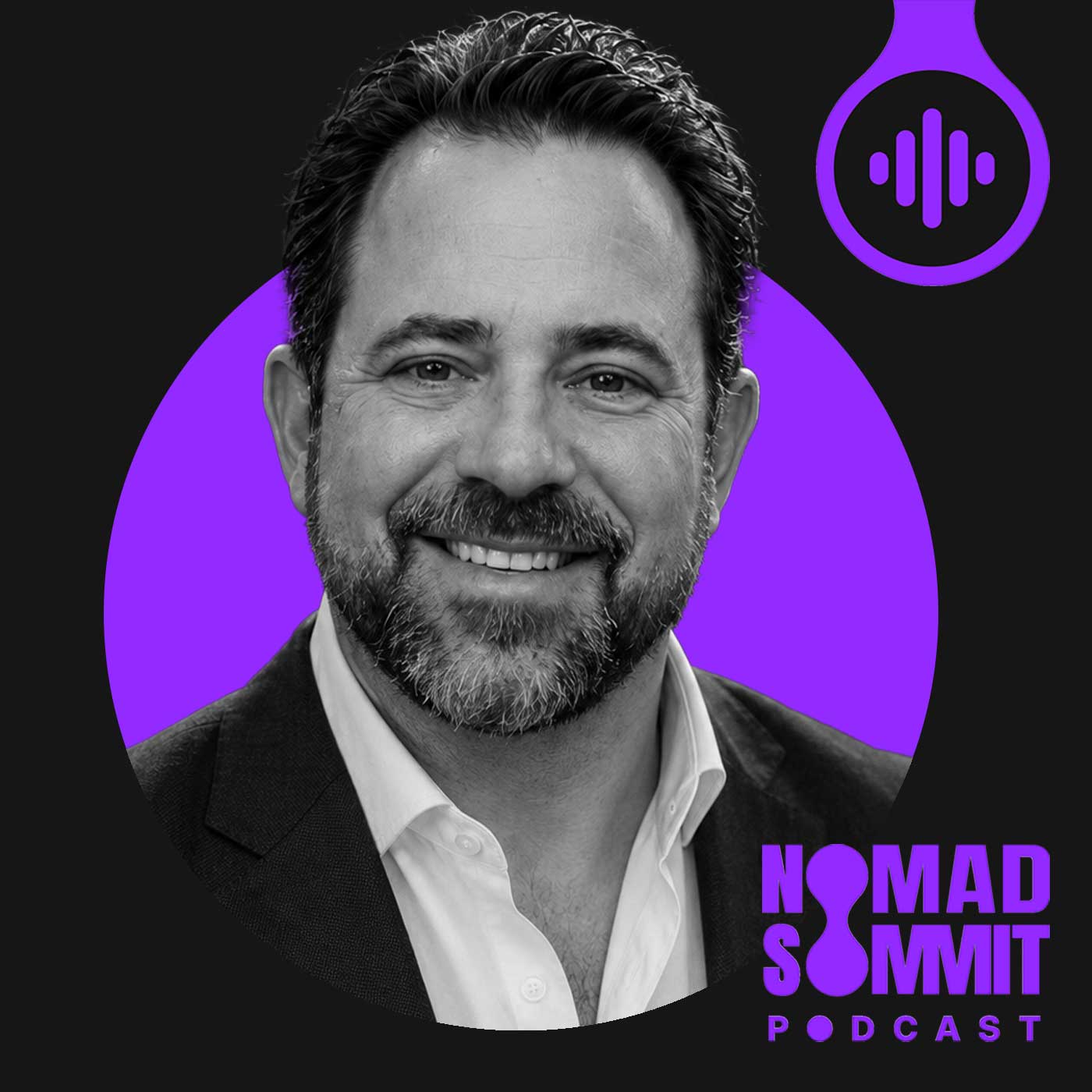
What does it actually take to become someone a global company wants to hire, trust, and keep working with? In this episode, Palle Bo and Alexandra talk with Josh Gould, Group CEO of thebigword, a global language-services company working with around 15,000 linguists and contractors across more than 80 countries.

Josh Gould
Group CEO of thebigword, a global language-services company.
66 | What Global Companies Really Want From Remote Workers
Show Notes
Remote work gives us freedom. Work from Chiang Mai. Take a call from Miami. Spend a few months in Europe. Build a business from wherever the Wi-Fi behaves.
But there is another side to the equation: what does the company on the other end actually expect from you?
In episode 66 of the Nomad Summit Podcast, Palle Bo and Alexandra sit down with Josh Gould, Group CEO of thebigword, a global language-services company working with around 15,000 linguists and contractors across more than 80 countries.
Josh spends a significant part of the year travelling between places including the United Kingdom, United States, India, Israel, and other international markets. So when he talks about managing people across borders and time zones, this is not a theoretical exercise.
And he has some strong opinions about what makes remote work actually work.
Listen to the full conversation in the embedded episode on this page. In the meantime, here are some of the ideas that stood out.
Remote Work Is Not for Everyone
There is a tendency in the digital nomad world to treat remote work as the obvious better way of working.
Josh is not quite so convinced.
“Work from home isn’t for everyone.”
His first requirement when hiring remotely is surprisingly simple: find people who actually want to succeed without someone looking over their shoulder.
“You’ve got to find someone who wants to succeed, who wants to be great, who takes pride over their work and isn’t just doing it because they’re getting paid.”
That sounds obvious. But when your manager is six time zones away and nobody notices whether you start at 8:00 or 11:00, self-management suddenly becomes a professional skill.
Freedom Comes With Responsibility
For freelancers, Josh sees things differently. If you are paid for a specific project or task, how you structure your day is largely your own business.
You might work four hours this week and eighty the next.
But for a full-time employee, he expects something else: not just completing the items on a to-do list, but actively looking for ways to create more value.
He describes the goal with one memorable word:
“We pay you to be phenomenal, to be amazing, to be irresistible.”
And by “irresistible,” he means becoming the person a company does not want to lose.
Finished Your Tasks? Josh Says You’re Not Finished
This may be one of the more controversial parts of the conversation.
Josh argues that if a full-time employee finishes every assigned task in four hours, that should not automatically mean closing the laptop and heading for the swimming pool.
“If you can do all your tasks in four hours, you don’t go to the swimming pool. You have to then add value. You have to think about something else to do that can wow our client base, wow our employee base or linguists.”
Alexandra immediately picks up on the tension.
Should companies actually expect employees to think like entrepreneurs? And if somebody naturally has that level of initiative, might they eventually decide to start their own company anyway?
Josh’s response is equally direct:
“People typically meet expectations. So if your expectation is they don’t, well, they won’t.”
Whether you agree with him or not, it raises an interesting question for anyone building a location-independent career: are you simply completing work, or are you becoming difficult to replace?
A Global Business Shouldn’t Really Be Global
Josh also has an unusual take on international expansion.
“I don’t ever think that you should be a global business. I think you should be a collection of local companies.”
The reason is simple: what works in one country might completely fail in another.
He uses McDonald’s as an example. The brand is recognizable almost everywhere, but the menu changes significantly depending on local tastes.
The logo travels. The exact product does not.
When China Taught thebigword a Very Expensive Lesson
Josh learned this the hard way.
thebigword expanded into China believing that the company’s reputation for quality would help it compete.
Instead, they discovered a market where many potential customers were prioritizing price over the level of translation quality the company was selling.
“When we went to China, we were a huge failure. We made an acquisition and it was a disaster because we would sell on quality and people said, ‘We don’t buy quality, we buy the cheapest price possible.’”
Josh even recalls visiting an OBGYN clinic in Shanghai with an unintentionally very unfortunate English translation on its signage.
When he pointed it out, the clinic’s response was essentially: the doctors are good and the prices are good, so customers will still come.
For Josh, it became an important business lesson: never assume that the things your customers value at home are the same things customers value somewhere else.
Digital Nomads Are Already Part of His Business Model
The most obvious connection between Josh’s world and the Nomad Summit audience is the enormous freelance network behind thebigword.
The company works with roughly 15,000 independent linguists around the world.
“They are freelancers. They are independent contractors. They are nomads. And they are free to work whenever they want to work, however they want to work with us.”
Some work in relatively ordinary translation jobs. Others operate in situations where the consequences of getting things wrong are much higher.
thebigword provides interpreters for hospitals, courts, police stations, immigration services, and government organisations. Depending on the assignment, contractors may require extensive background checks, training, or security clearances.
That makes trust a very practical issue.
Can someone communicate clearly? Can they work independently? Can they protect confidential information? Can they deliver consistently when nobody is physically supervising them?
Those questions apply to far more than translators.
They apply to almost anyone trying to build a serious remote career.
Remote Teams Still Need Human Contact
For all his enthusiasm for technology and distributed work, Josh does not believe everything should happen through a screen.
thebigword uses tools such as Microsoft Teams, data systems, and CRMs to manage a hybrid workforce.
But Josh deliberately allows something that many efficiency-obsessed managers try to eliminate: chatting.
“We have meetings where the first quarter of the meeting, we just chat.”
They talk about football, rugby, politics, and the normal things humans talk about when they are not desperately trying to optimise every second of a meeting.
“That’s what makes us human and that’s what helps build trust.”
And sometimes even that is not enough.
Josh spends more than 100 days a year travelling for business, sometimes significantly more, because he still believes there is value in actually being in the same room.
“You can only go so far with a screen.”
The CEO Who Envies the People Leaving at 5:30
There is also a more personal side to the conversation.
Entrepreneurship is often sold as the ultimate route to freedom: become your own boss, control your schedule, work from anywhere.
Josh has some experience with that freedom. He travels extensively, brings his children when he can, and says he could reorganise his life immediately if somebody close to him needed help.
But there is a cost.
He admits that when he visits company offices and watches employees leave at 5:30, part of him is jealous.
“They’re now going to the pub and they couldn’t give a rat’s you-know-what about what’s happening in the business.”
The business does not disappear from his mind just because it is Friday evening.
As Alexandra puts it during the conversation, one of the classic jokes about entrepreneurship is:
“I didn’t want to work nine to five, so I started my own business. Now I work twenty-four seven.”
Josh does not reject that reality. He simply argues that the freedom and responsibility come together.
Then There’s AI
You might expect the CEO of a company built around human translation to be terrified of artificial intelligence.
Not exactly.
Josh says thebigword has been investing in forms of AI and machine learning for decades, long before ChatGPT made artificial intelligence part of everyday conversation.
The company previously developed systems that could reuse translated material for clients such as Honda, and later worked with Google on neural machine translation.
“AI is a threat and an opportunity to every single business.”
For remote professionals, that may be the more useful way to think about it.
The question is not simply whether AI can perform part of your job. It almost certainly can.
The better question is: what can you offer that makes a client or employer still want you involved?
Judgment. Reliability. Context. Initiative. Trust. Cultural understanding. The ability to solve the problem nobody specifically assigned to you.
In Josh’s terminology: becoming irresistible.
Want to Work for a Company Like thebigword?
Toward the end of the episode, Palle asks the obvious question on behalf of Nomad Summit listeners around the world.
What if somebody listening thinks, “That sounds like me. I can work independently. I understand remote work. I want to work internationally.”
Can they apply?
Josh’s answer is yes.
People with the right skills can look for full-time positions or opportunities within the company’s global linguist network at thebigword.com.
Josh is also active on LinkedIn, and if you are more interested in entrepreneurship, acquisitions, and building a company you may eventually sell, he hosts Exec Craft on YouTube.
Listen to Episode 66
This conversation covers much more than how to land a remote job.
It is about the trade-offs behind freedom, why cultures cannot simply be copied and pasted, what companies actually expect when nobody is watching you work, and how humans can remain valuable as technology takes over more tasks.
Some of Josh’s opinions may make you nod enthusiastically. Others may make you want to argue with him.
That is exactly why the full conversation is worth hearing.
Listen to Episode 66: What Global Companies Really Want From Remote Workers in the embedded player on this page.
Relevant Links
Key Takeaways
- Why successful global companies need to adapt to local cultures and markets
- What employers look for when hiring remote workers
- Why communication, initiative, and reliability matter as much as technical skills
- The difference between managing freelancers and full-time remote employees
- How AI is transforming translation and international communication
Keep Listening

EP. 8 · Jul 2025 · 35 min
08 | Culture Clash: What Remote Teams Get Wrong About Communication
with Renita Kasper & Miguel Piñas
How do you build strong remote teams when your colleagues come from completely different cultural backgrounds? In this episode of the Nomad Summit Podcast, we…
EP. 63 · Jul 2026 · 30 min
63 | From Work From Anywhere to Deep Work at Sea
with William Campbell
In this episode of the Nomad Summit Podcast, Palle Bo sits down with William Campbell, a strategy, communication, and leadership advisor who has been working…
EP. 70 · Sep 2026 · 28 min
70 | When Honest Sounds Rude: Culture Shock for Digital Nomads
with Tamara Peklić
Episode Sponsor – Nomad Pioneers Nomad Pioneers is bringing together more than 100 remote workers, founders, freelancers and creators in Cuenca, Ecuador, for a…

Aug 2026 · 30 min
67 | Want to Work From Anywhere? Here's What It Really Takes
with Maya Middlemiss, Christoph Huebner, Alexandra Mosnitska
In Episode 67 of the Nomad Summit Podcast, Maya Middlemiss joins Palle Bo, Christoph Huebner and Alexandra Mosnitska to look back at the first Nomad Summit…

EP. 61 · Jul 2026 · 35 min
61 | The 30-Hour Nomad Workweek – Games, Tech, AI Art and Freedom
with Steve Tietze
What happens when an early video game developer, AI artist, fractional CTO and digital nomad decides to redesign his life around creativity, exploration and…

EP. 32 · Dec 2025 · 30 min
32 | Juliana Rabbi: Christmas as a Digital Nomad – Freedom, Loneliness, and Everything in Between
with Juliana Rabbi
What is it really like to spend Christmas away from family when you live a nomadic life? In this episode of The Nomad Summit Podcast , we sit down with digital…

Never Miss an Episode
Get new episodes, event announcements, and nomad insights delivered straight to your inbox.

